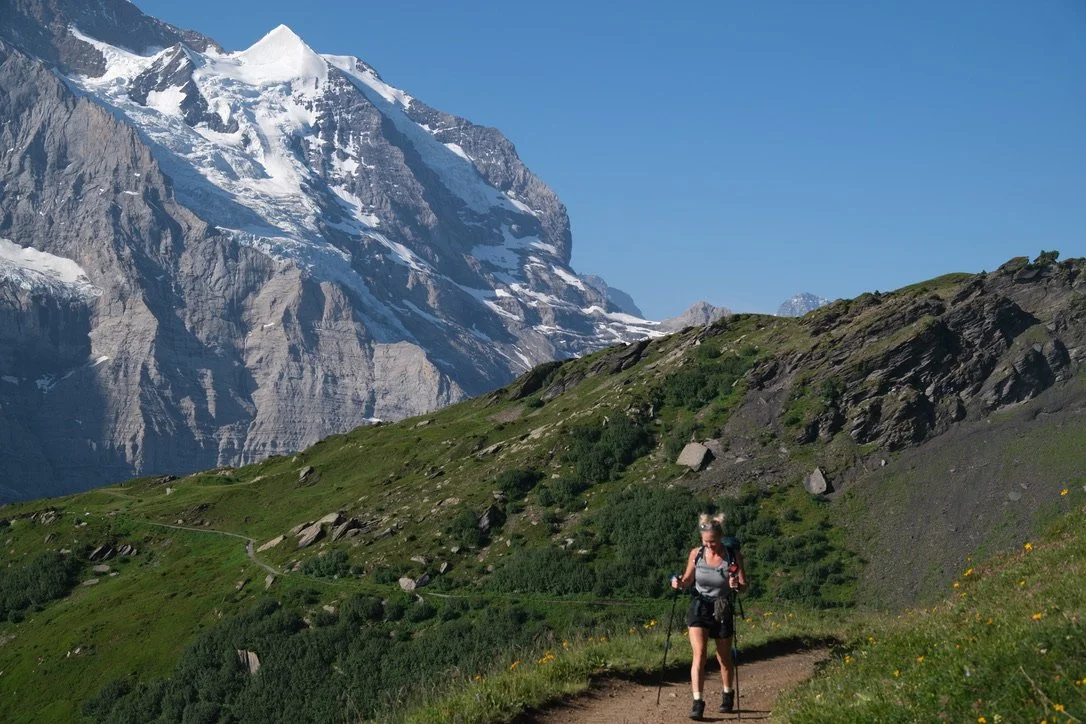
What to Pack for the Bernese Oberland Traverse
One of the biggest advantages of the Bernese Oberland Traverse is that you don’t need to carry traditional backpacking gear.
Since we stayed in a combination of mountain huts and hotels, our packs were much lighter than they would have been on a camping trip. Breakfast and dinner were included or available at almost all of our accommodations, so we only needed to carry lunches, snacks and the essentials each day.
Even with lightweight packs, there are a few items I wouldn’t hike without—and a few I packed but never used.
Packs
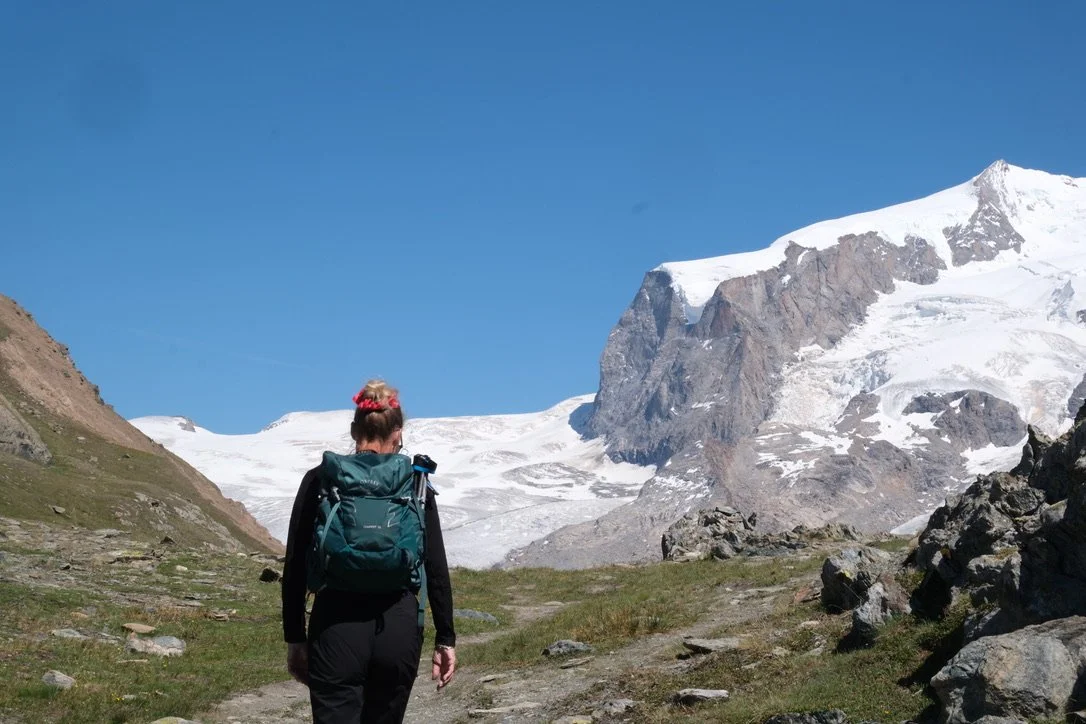
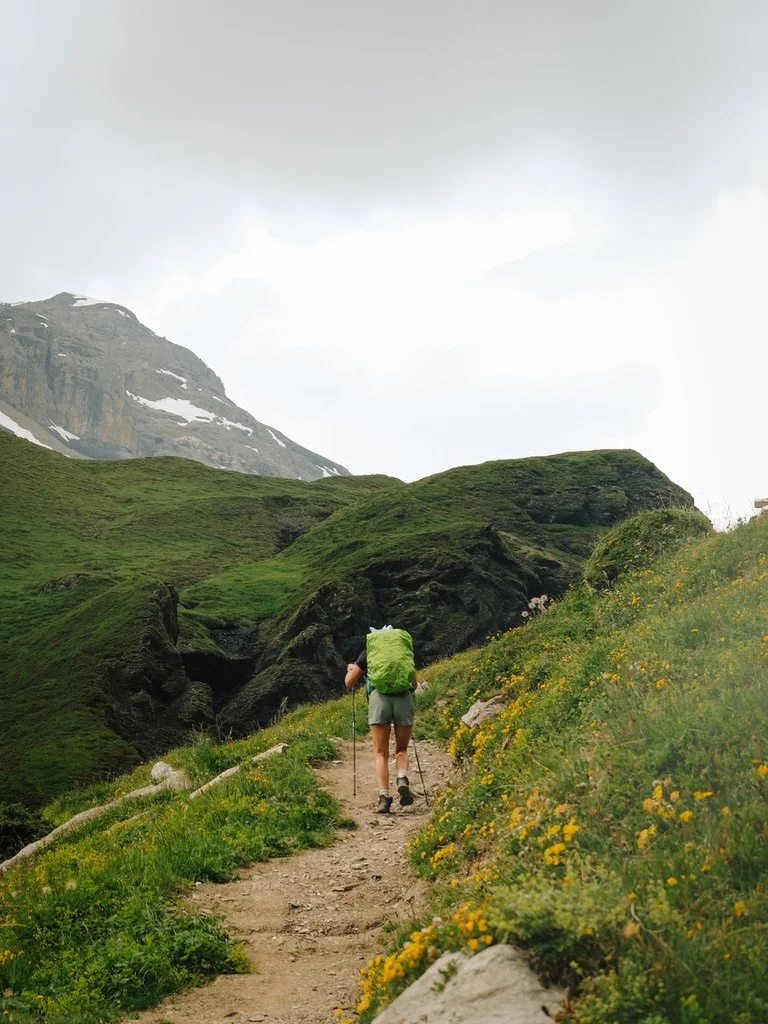
I carried my Rab Aeon ND 25 day pack (this pack is no longer available but here’s a close alternative RAB Airox 28ND), while my larger 60 L Eagle Creek Cargo Hauler stayed behind with our extra clothing and travel gear.
Using SBB’s luggage transfer service, we were able to send our main luggage ahead while hiking with only what we needed for the week. It made the climbs significantly more enjoyable than carrying everything for our entire trip.
Footwear
Footwear is one place I wouldn’t try to save weight.
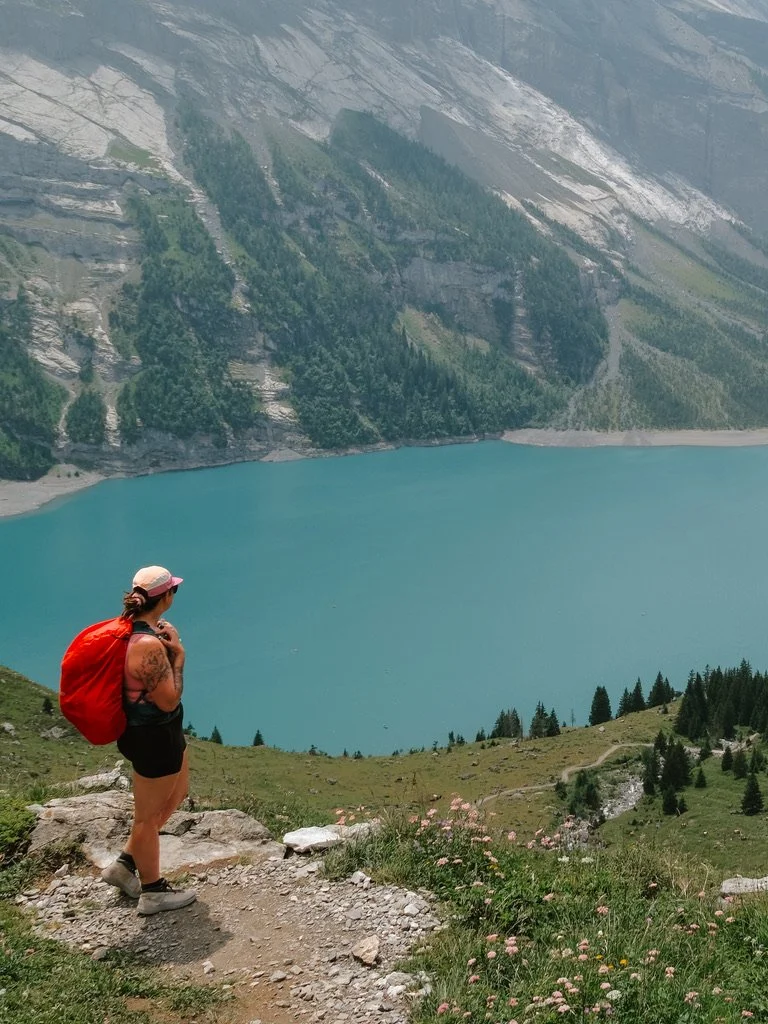
I wore my Arc’teryx Kopec hiking boots for the entire traverse and never regretted it. The trails are generally well maintained, but there are plenty of rocky sections, steep descents and a few lingering snow crossings where the extra support was appreciated.
For the evenings, I packed a pair of The North Face Explore Camp sandals, which were perfect for relaxing around the huts and giving my feet a break after a long day on the trail.
Clothing
One thing I would absolutely change next time is packing fewer clothes.
We built a laundry stop into our itinerary when we returned to Interlaken midway through the trip, so I simply didn’t need as many changes of clothes as I brought.
If I were doing the hike again, I’d pack:
1 pair of Lululemon leggings for cooler mornings or evenings
3–4 sports bras
Underwear for 4–5 days (washing midway through the trip)
Switzerland’s mountain weather changes quickly, so layering is much more important than packing lots of clothing.
Rain & Warm Layers
Even in July we experienced several afternoon thunderstorms.
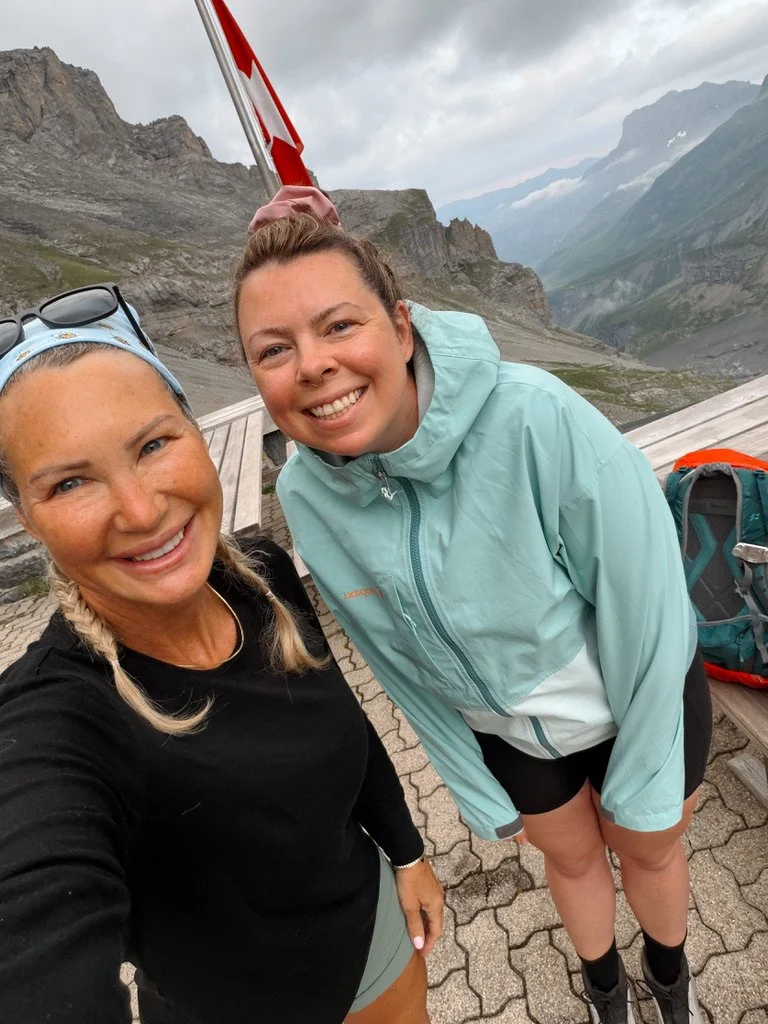
A lightweight rain jacket was essential, and my Cotopaxi Cielo rain jacket got plenty of use.
I also packed my Ibex Wool Aire Hoodie, but hardly wore it.
If I were packing again for July, I’d leave it at home and rely on my rain jacket over a hiking layer instead.
Hiking Gear
These were the items I was most grateful to have:
Charging cables
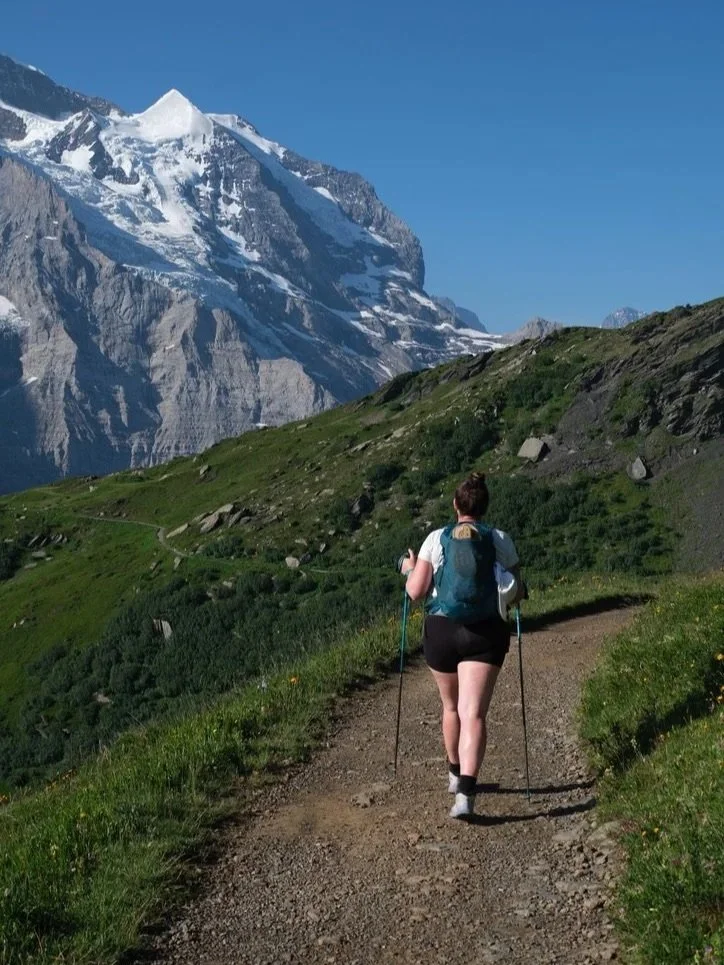
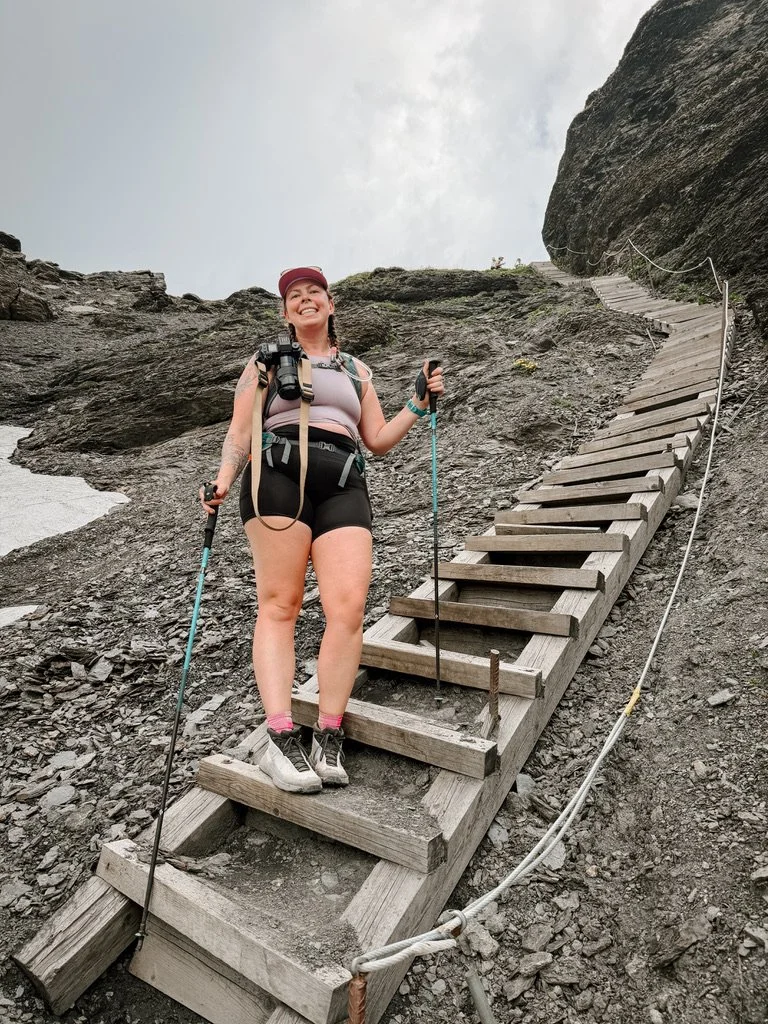
My trekking poles probably made the biggest difference, especially on the long descents into Lauterbrunnen, Kandersteg and Leukerbad.
Camera Gear
Photography is a huge part of how I travel, so my camera always comes with me.
For this trip I packed:
Extra batteries
Cleaning cloth
The 18–120 mm lens ended up being the perfect travel lens because it let me capture everything from wide alpine landscapes to tighter mountain details without constantly changing lenses.
Toiletries
I kept this as simple as possible.
My essentials included:
Toothbrush and toothpaste
Neutrogena Sunscreen
Prescription medications
Contact lenses and solution
Because we were staying in huts and hotels rather than camping, there was no need to carry large bottles of anything.
Hut Essentials
If you’re new to hut-to-hut hiking, there are a few things you’ll want to pack that you might not think of.
Most mountain huts require guests to use a sleeping bag liner, even when bedding is provided.
Mine packed down incredibly small and was well worth bringing.
Optional, but nice to have if you plan to shower or swim in any of the lakes.
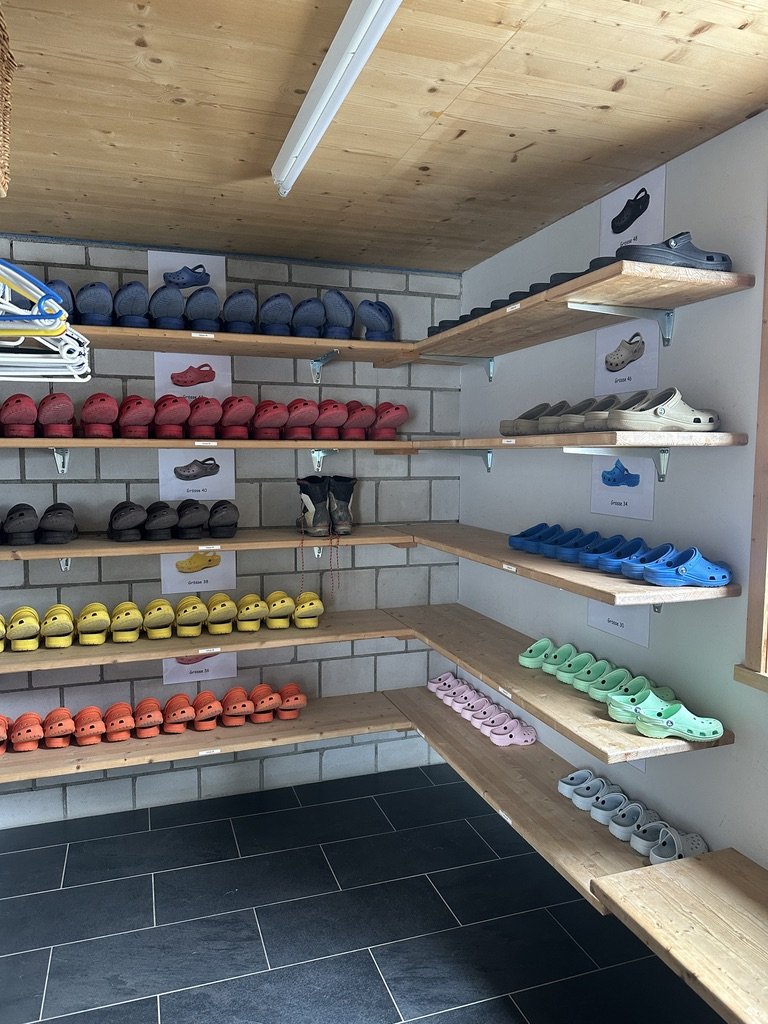
Sandals
Perfect for wearing around the huts after hiking all day.
Even though we booked private rooms whenever possible, these are worth packing just in case.
Food & Snacks
One of the biggest misconceptions about this hike is that you’ll need to carry a week’s worth of food.
We didn’t.
Breakfast and dinner were included or available at nearly all of our accommodations, and we regularly passed through villages where we could restock snacks.
Our daily food was usually just:
Trail mix
Protein bars
Electrolytes
Sandwiches or pastries
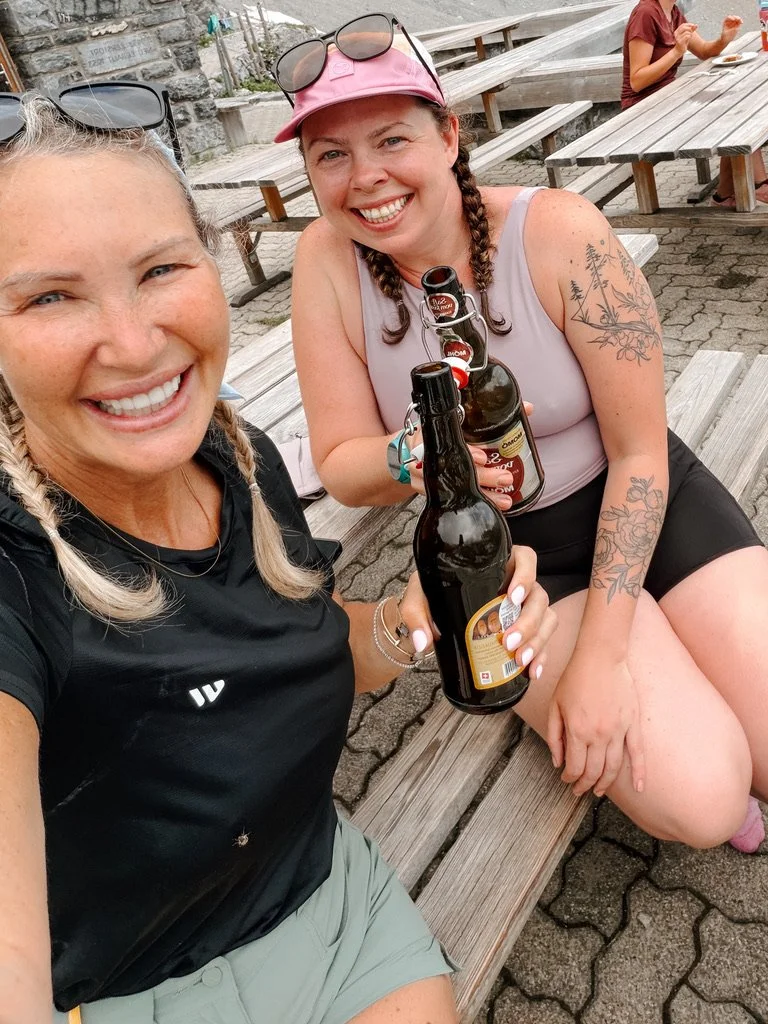
Chocolate (because Switzerland)
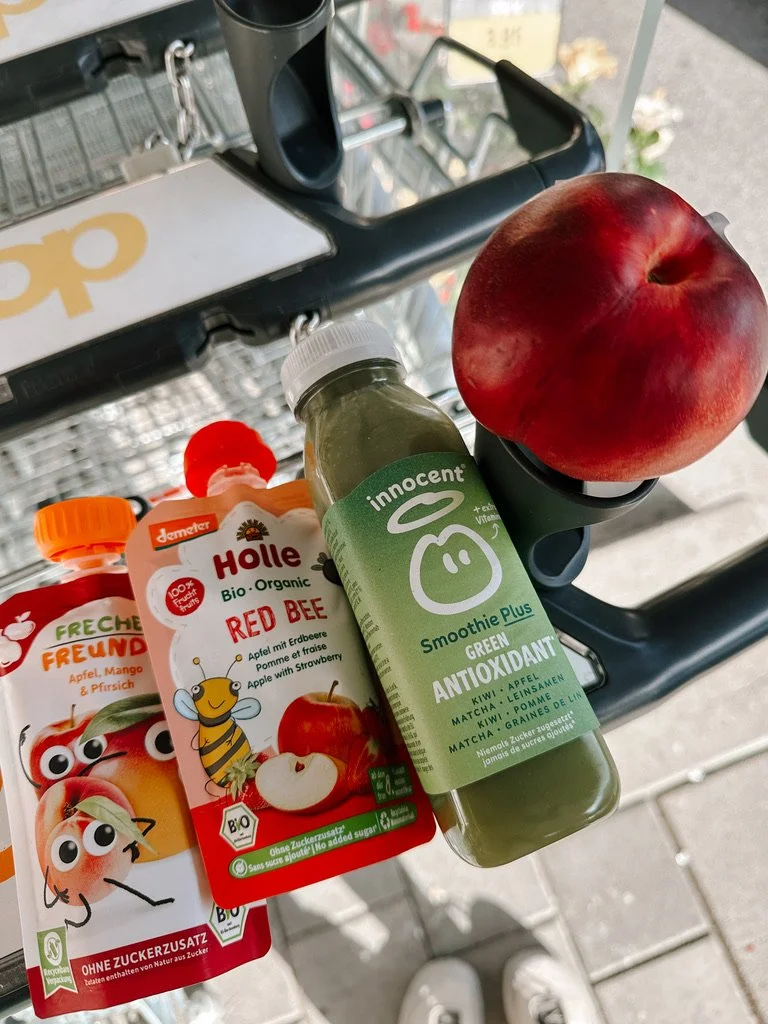
One of my favourite surprises was the number of honesty shops we found along the trail, including tiny farm stands selling cold drinks and snacks in the middle of nowhere.
My Biggest Packing Lesson
The biggest mistake I made wasn’t forgetting something—it was overpacking.
Between Switzerland’s excellent infrastructure, our planned laundry stop in Interlaken and SBB’s luggage transfer service, I could have comfortably completed the hike with a noticeably lighter pack.
If you’re debating whether to bring something “just in case,” I’d encourage you to leave it behind. Over seven days of hiking, every little bit of weight adds up.