The Ultimate Bernese Oberland Travel Guide
How to Plan the Perfect Hiking Trip Through Switzerland’s Most Beautiful Region
After spending two weeks exploring Switzerland, I can confidently say that if I had to choose just one region to recommend to first-time visitors, it would be the Bernese Oberland.
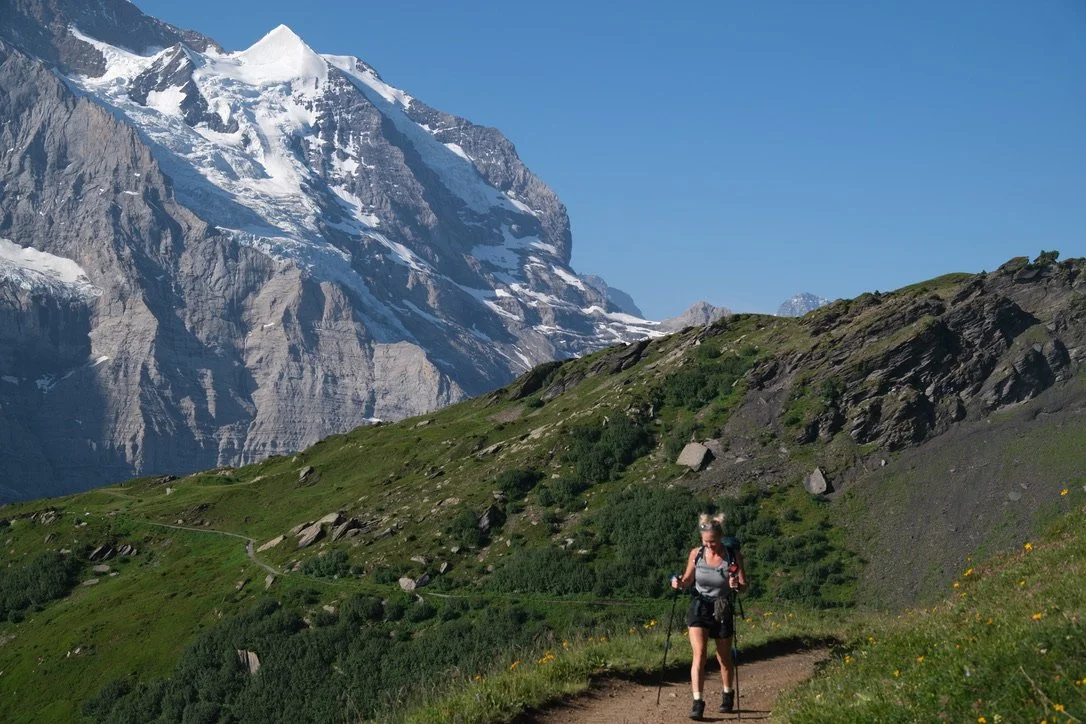
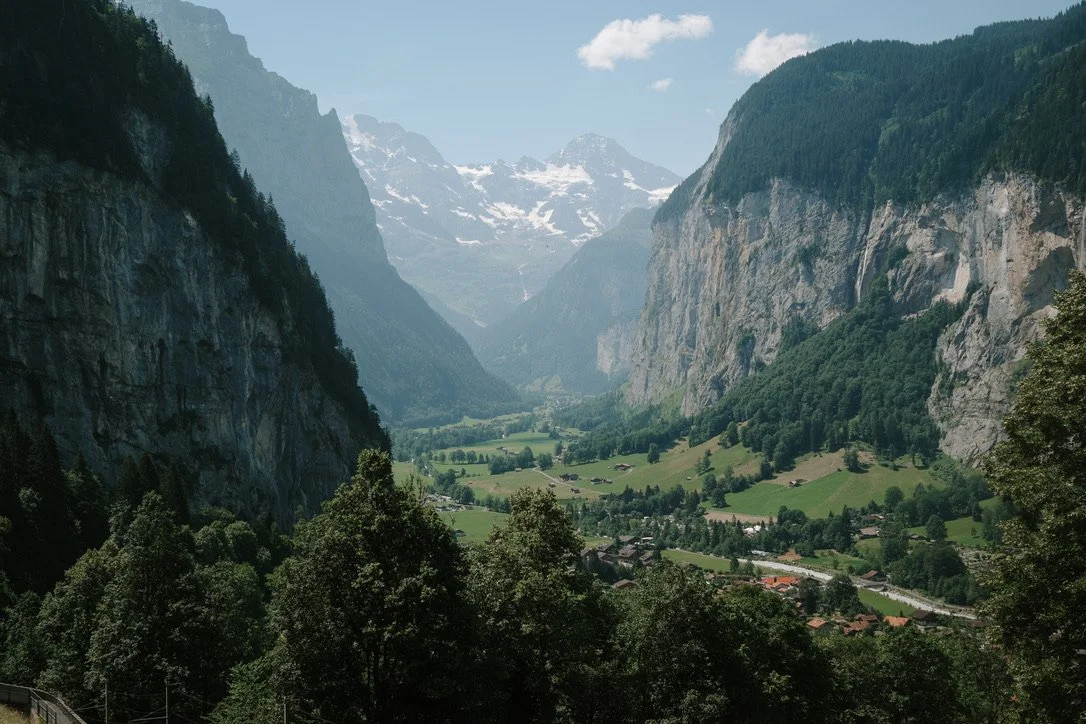
This corner of Switzerland has everything people imagine when they picture the country: towering snow-capped peaks, turquoise alpine lakes, waterfalls, charming villages, scenic mountain railways and some of the best hiking I’ve experienced anywhere in the world.
As someone who’s hiked more than 300 trails across Canada, the United States and Europe, I wasn’t sure Switzerland could possibly live up to the expectations I’d built in my head over the years.
It somehow exceeded them.
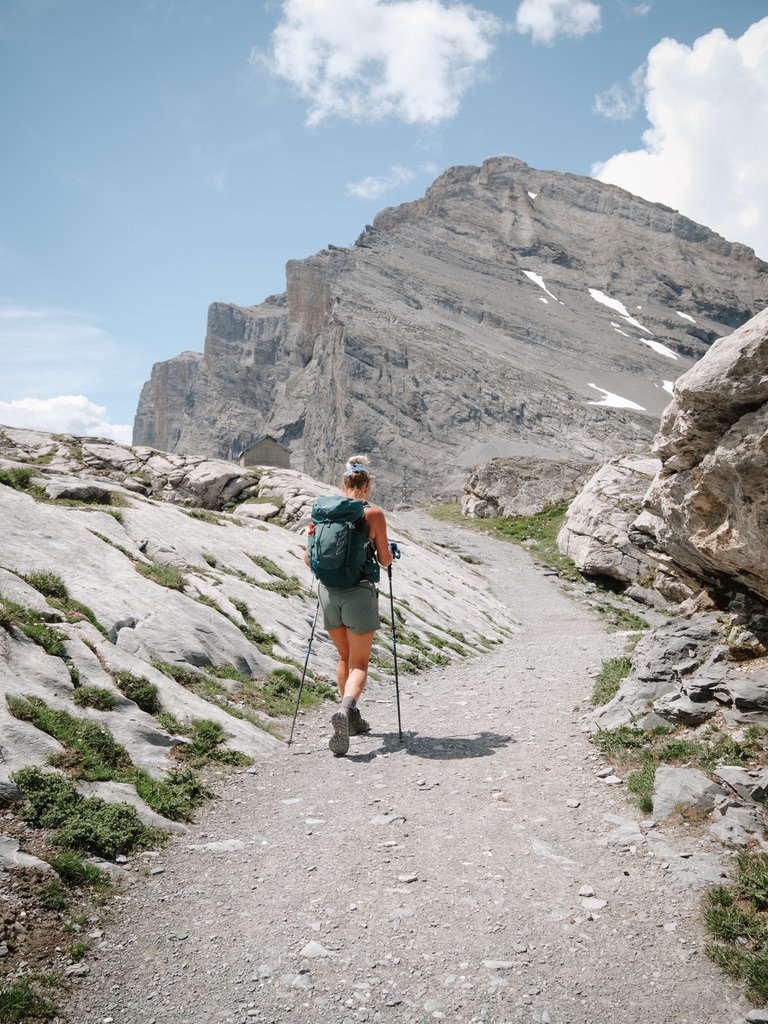
Over two weeks we hiked more than 130 kilometres, crossed high mountain passes, stayed in remote alpine huts, explored car-free villages, rode historic cogwheel railways and watched the sunset from mountains that emptied of tourists as soon as the last gondola headed back to the valley.
What surprised me most wasn’t just how beautiful it was—it was how easy everything felt.
We never rented a car.
Instead, we travelled almost exclusively by train, gondola and cable car using Switzerland’s incredible public transportation network. We even shipped our luggage ahead while hiking for a week with lightweight day packs, making the entire experience far more enjoyable than carrying everything on our backs.
Planning the trip took weeks of research, comparing hiking routes, accommodations, transportation options and mountain huts. Looking back, there are definitely things I’d do differently—but there are also plenty of decisions I’m incredibly glad we made.
This guide brings all of that together.
Whether you’re planning a week of hiking, a longer Switzerland road trip, or simply trying to decide whether places like Mürren, Grindelwald or Jungfraujoch are worth adding to your itinerary, you’ll find everything I wish I’d known before we left.
Inside you’ll find:
A complete 7-day Bernese Oberland hiking itinerary
How to get around without renting a car
Whether the Swiss Half Fare Card is worth it
How we used SBB’s luggage transfer service to hike with lightweight packs
Where we stayed (and where I’d stay again)
My favourite hikes, viewpoints and villages
A realistic budget breakdown
What I’d pack differently next time
Honest opinions on what’s worth the money—and what isn’t
I hope this guide helps you spend less time planning and more time enjoying one of the most beautiful mountain regions I’ve ever had the chance to explore.
Where is the Bernese Oberland?
If you’ve started researching Switzerland, you’ve probably come across terms like Bernese Oberland, Jungfrau Region, and Interlaken used almost interchangeably.
They’re closely connected, but they’re not exactly the same thing.
The Bernese Oberland is a large region in the canton of Bern, stretching across some of Switzerland’s most spectacular mountain landscapes. It’s home to iconic destinations like Interlaken, Grindelwald, Lauterbrunnen, Mürren, Wengen, Kandersteg and Oeschinensee, along with countless hiking trails, mountain huts and scenic railways.
Within the Bernese Oberland sits the Jungfrau Region, which centres around the famous trio of Eiger, Mönch and Jungfrau. This is where you’ll find many of the destinations first-time visitors recognize, including Grindelwald, Wengen, Lauterbrunnen, Mürren and Jungfraujoch.
For this trip, we based most of our adventure in the Jungfrau Region before continuing south to Zermatt after completing the Bernese Oberland Traverse.
One of the things I loved most about travelling here was how connected everything felt. Despite covering a huge area over two weeks, we never once felt like transportation was complicated. Between trains, gondolas, buses and cable cars, it was easy to move between villages and trailheads without ever needing a vehicle.
If you’re visiting Switzerland primarily for hiking, mountain scenery and alpine villages, I genuinely think the Bernese Oberland deserves to be the focus of your itinerary.
💡 Cassie’s Tip: Start Here
If you’re trying to decide where to spend the majority of your time in Switzerland, I’d dedicate at least 5–7 days to the Bernese Oberland before heading elsewhere. We spent over a week here and still left with a list of places we’d love to come back and explore.
Planning Your Bernese Oberland Trip
If there’s one thing I learned while planning this trip, it’s that Switzerland can be as simple or as complicated as you make it.
There are hundreds of hiking trails, dozens of mountain huts, scenic train routes, cable cars, gondolas, mountain railways and villages to choose from. It’s easy to fall into a rabbit hole of trying to compare every possible itinerary.
I probably spent weeks researching routes before we left, and while I enjoyed the planning process, there are a few resources that made it dramatically easier.
The Hiking Club App
If you’re planning a hiking-focused trip to Switzerland, this is one resource I genuinely recommend.
I discovered The Hiking Club years ago after Andrea recommended it in a blog and it ended up becoming the starting point for our entire itinerary.
Instead of trying to build a multi-day route from scratch, the app asks a few simple questions, including:
How many days you want to hike
Your hiking experience
Your preferred daily distance and elevation
Whether you’d rather stay in mountain huts or hotels
Where you’d like to start and finish
From there, it generates complete itineraries, accommodation suggestions, transportation logistics and alternate route options.
I didn’t follow the suggested itinerary exactly—we customized it quite a bit—but having a solid framework saved me countless hours of research.
One of my favourite features was being able to compare alternate routes. It made it much easier to decide where it was worth adding an extra night or taking a different trail.
At roughly $150 CAD, I thought it was excellent value considering how much time it saved.
If you’re someone who enjoys planning but doesn’t want to spend weeks piecing everything together, I’d absolutely recommend starting here.
💡 Cassie’s Tip: Use The Hiking Club to build your initial itinerary, then customize it based on the experiences that matter most to you. That’s exactly what we did.
How Many Days Do You Need?
You could easily spend several weeks exploring the Bernese Oberland, but I think 5–7 days is the sweet spot for most people.
Here’s how I’d break it down.
3 Days
Perfect if you’re adding the Bernese Oberland to a larger Switzerland itinerary.
I’d focus on:
Grindelwald
Bachalpsee
Mürren
Lauterbrunnen
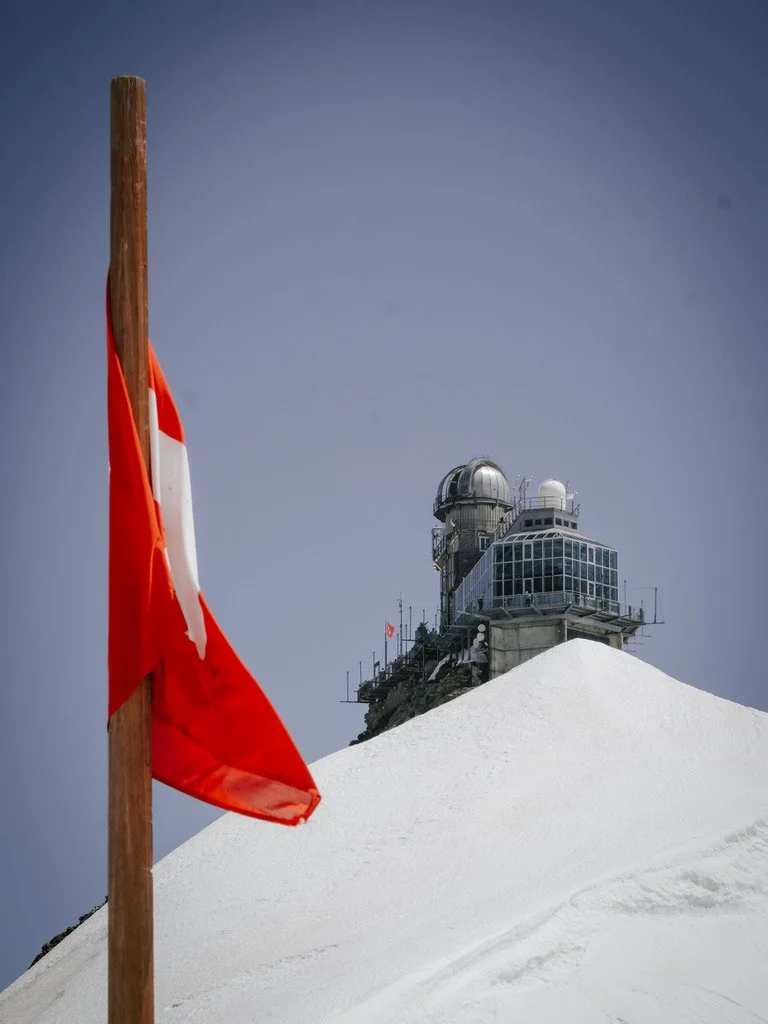
Jungfraujoch
You won’t have time for a multi-day hike, but you’ll still experience many of the region’s highlights.
5–7 Days
This is what I’d recommend for most visitors.
It gives you enough time to:
Complete a hut-to-hut hike.
Stay overnight in First or Mürren.
Explore multiple villages.
Ride several mountain railways.
Build in some flexibility for weather.
10+ Days
If you’re an avid hiker, I’d happily spend ten days or more here.
That gives you time to:
Add more hut stays.
Explore quieter trails.
Visit Zermatt.
Slow down and enjoy the mountain villages rather than constantly moving.
When Is the Best Time to Visit?
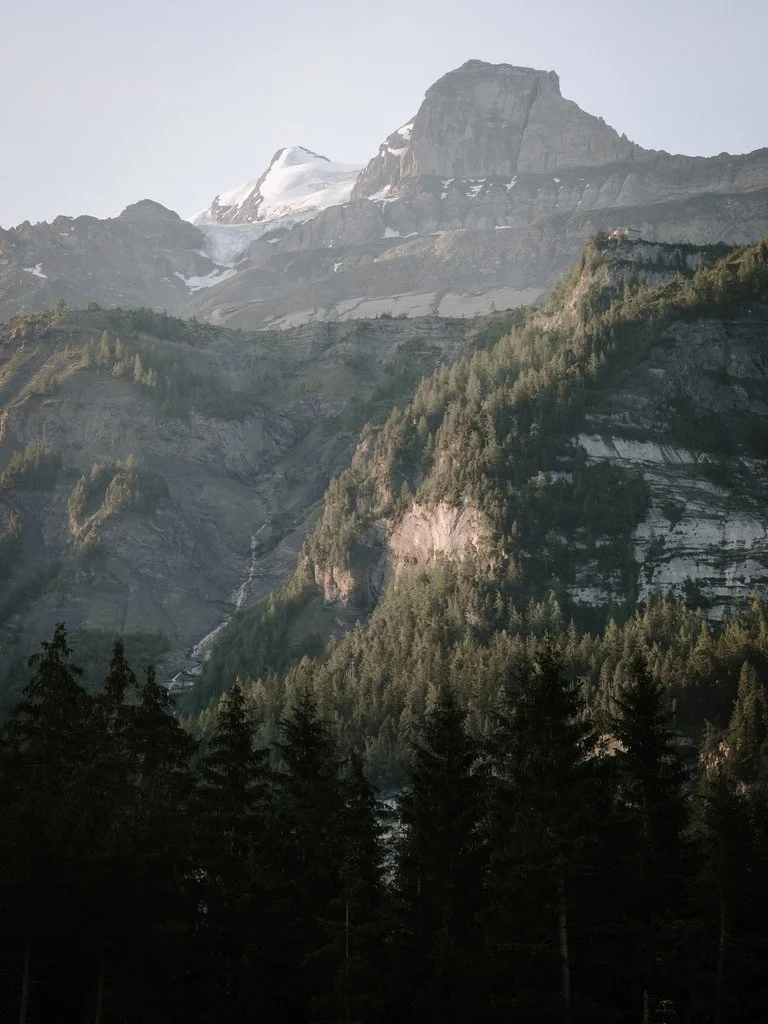
For hiking, I’d recommend late June through September.
We visited in early July and thought the timing was excellent.
The trails were mostly snow-free, the huts were open, the wildflowers were incredible and all of the mountain transportation was running.
There were still a few small snow crossings at higher elevations, but nothing that required technical equipment.
Here’s what to expect throughout the season.
Late June
Pros:
Wildflowers begin blooming.
Longer daylight hours.
Fewer crowds.
Cons:
More lingering snow on higher passes.
Some routes may still be closed depending on the winter.
July
This was when we visited, and I’d absolutely recommend it.
The wildflowers were at their peak, almost every trail was open, and the weather was generally fantastic.
We experienced a few afternoon thunderstorms, but they typically rolled through quickly before clearing for beautiful evenings.
August
Very similar to July, although generally busier with European summer holidays.
Expect warmer temperatures and more people at popular attractions like Oeschinensee and Jungfraujoch.
September
Another fantastic option.
You’ll typically find:
Cooler hiking temperatures.
Fewer crowds.
Beautiful fall colours beginning at higher elevations.
The trade-off is shorter daylight hours and a greater chance of early snow toward the end of the month.
💡 Cassie’s Tip: Afternoon thunderstorms are common in the Alps during summer. We tried to start hiking early whenever possible so we were at our accommodation before the weather rolled in.
Do You Need a Car?
In my opinion?
No.
In fact, I think renting a car would have made this trip more complicated.
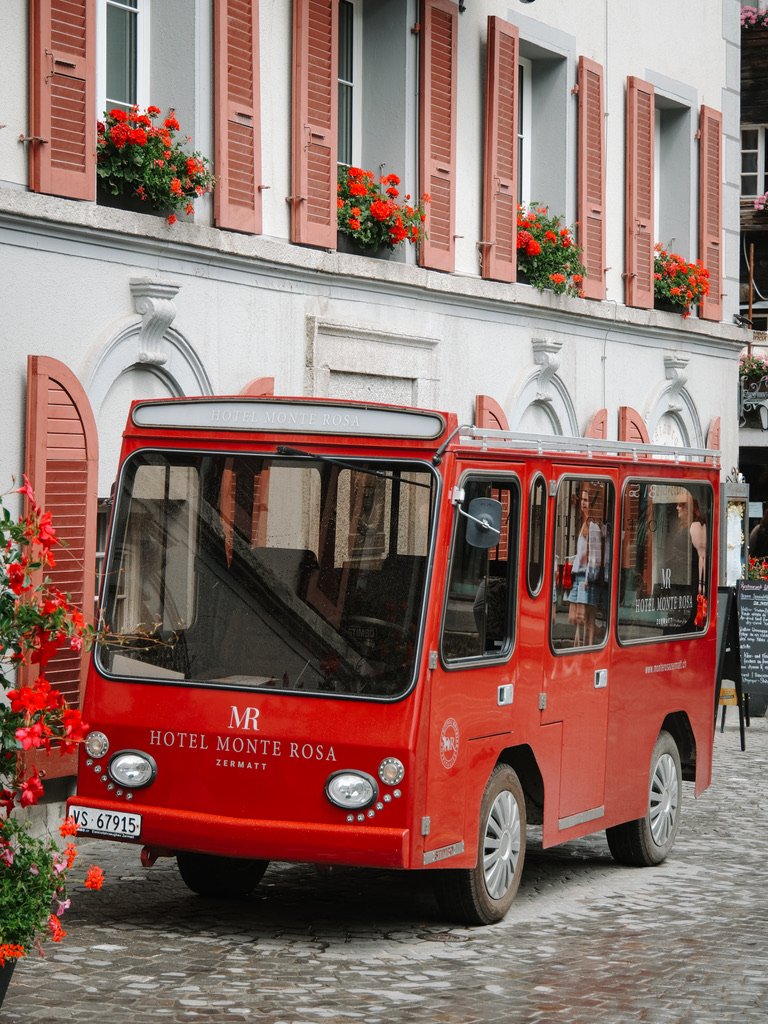
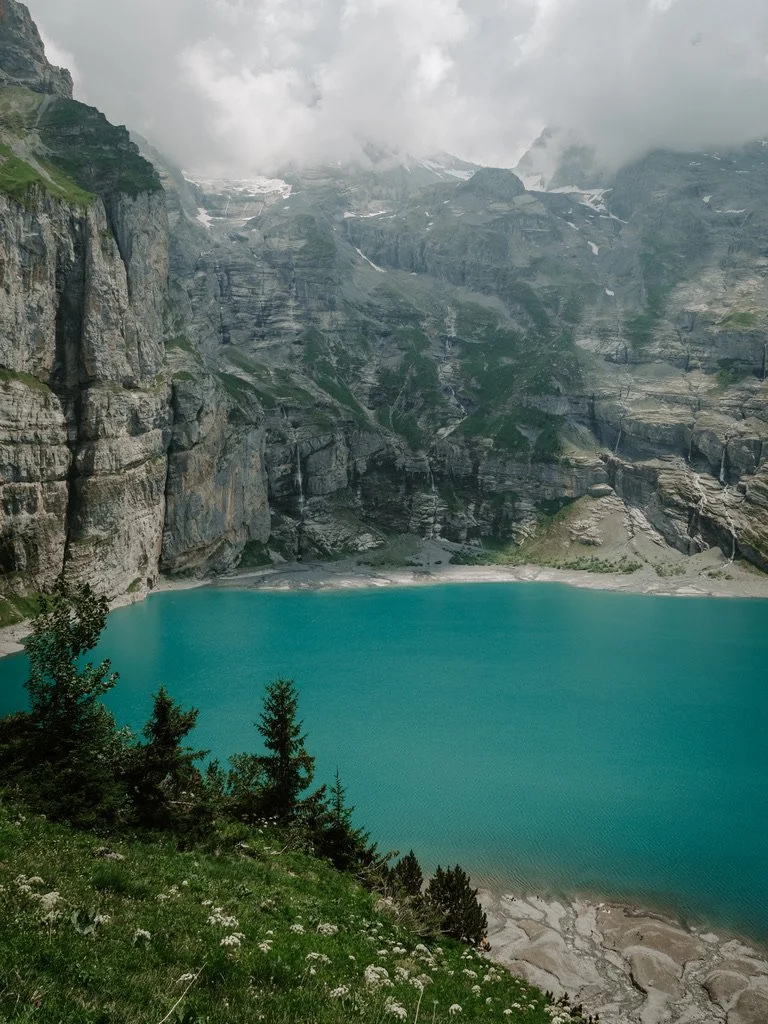
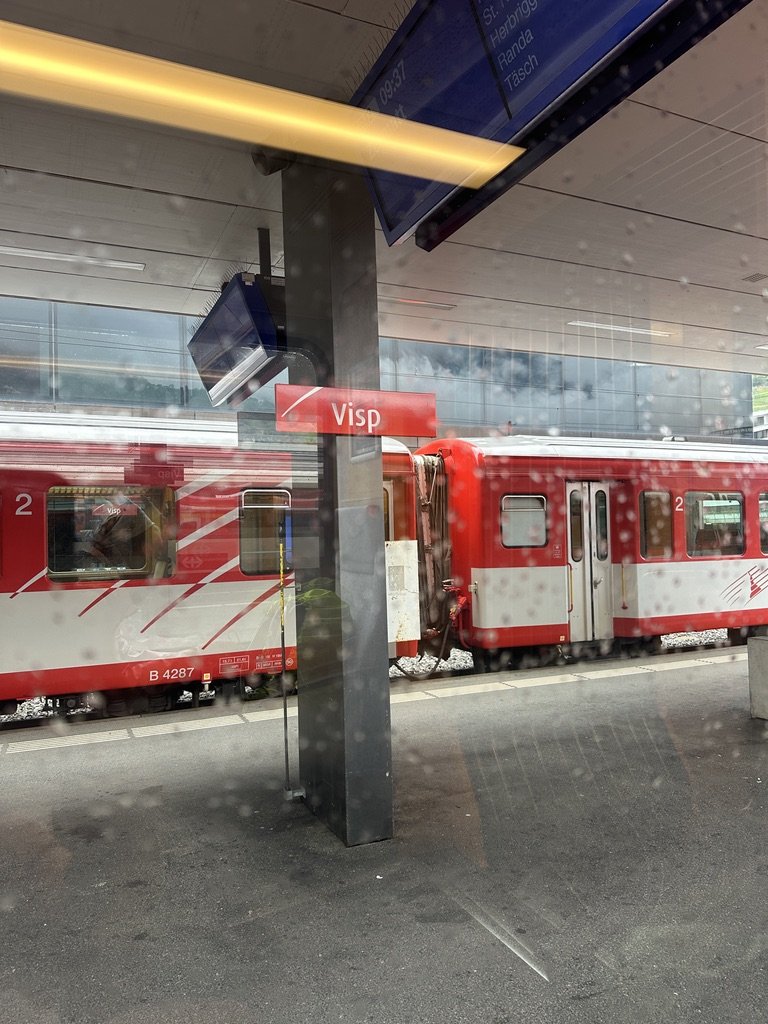
Many of the places people come to Switzerland to visit—including Mürren, Wengen and Zermatt—are completely or mostly car-free.
Instead of worrying about parking, fuel, road closures or mountain driving, we travelled almost entirely by train, gondola and cable car.
The public transportation system was honestly one of the highlights of the trip.
Every connection felt seamless. We never had to think about traffic. And the views from the train were often part of the experience.
The only time I’d consider renting a car would be if I planned to explore more remote regions outside the main rail network.
For this itinerary, I’d skip it.
Getting Around Switzerland
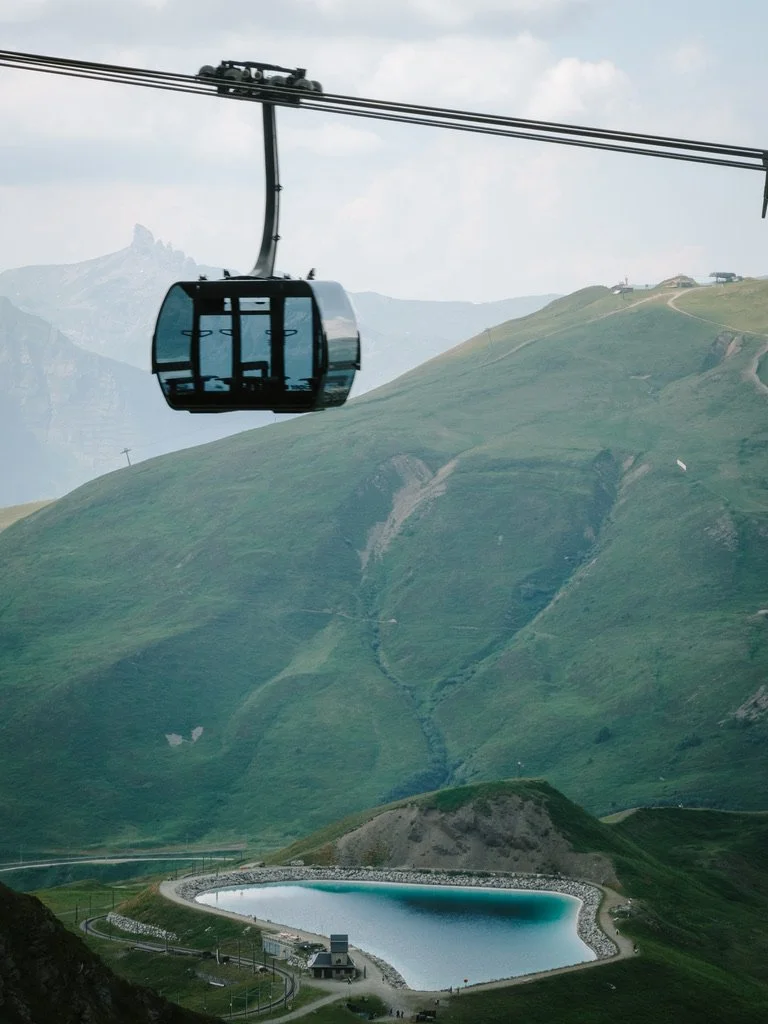
One of the biggest surprises of our trip was just how easy public transportation was.
Everything revolves around the SBB network, and once you understand how it works, getting around becomes incredibly straightforward.
Download the SBB App Before You Leave
If you only download one travel app before arriving in Switzerland, make it SBB Mobile.
We used it constantly throughout the trip.
The app allowed us to:
Search train routes
View live departure boards
Purchase tickets
Store all of our tickets digitally
Add our Swiss Half Fare Cards
Check platform changes
View transfer times
It quickly became one of the most-used apps on my phone.
The journey planning is excellent, and we never had any trouble navigating between trains, buses, gondolas or mountain railways.
Is the Swiss Half Fare Card Worth It?
For us, absolutely.
We purchased the Swiss Half Fare Card, and I’d do exactly the same thing again.
It cost approximately $275 CAD. Every train, cable car and gondola was then discounted by 50%. Even with several expensive mountain excursions, we came out well ahead.
In total we spent roughly another $1,000 CAD on transportation throughout the week, including:
Harder Kulm Funicular
Schynige Platte Railway
First Gondola
Jungfraujoch train
local trains & buses
gondolas
cable cars & funiculars
2 day Peak Pass in Zermatt
The only thing I wouldn’t spend the money on again was the Glacier Express.
We rode First Class from Zermatt to Andermatt, and while it was a nice experience, I’d much rather spend that money on another mountain hut or an extra hiking day.
SBB Luggage Transfer
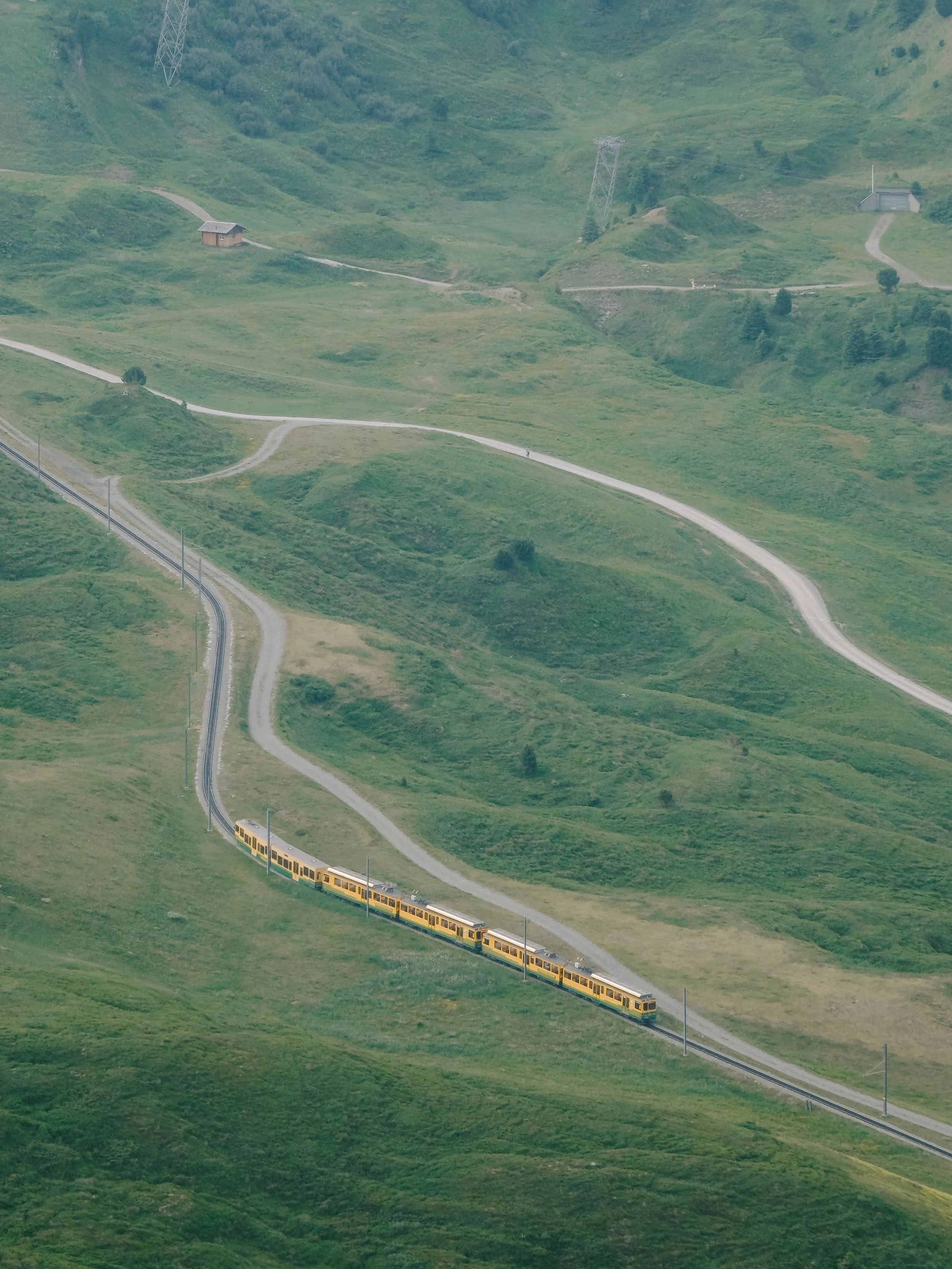
This might be my favourite Switzerland travel tip.
Before starting our multi-day hike, we left our main luggage in Interlaken.
After three days on the trail, we returned to Interlaken for one night, repacked a few things and then used SBB’s luggage transfer service to send our bags ahead to Zermatt.
That meant we spent an entire week hiking with lightweight day packs instead of carrying everything we needed for two weeks.
Booking was simple through the SBB website, and our luggage was waiting for us when we arrived in Zermatt.
If you’re combining hut-to-hut hiking with hotels, I can’t recommend this enough.
💡 Cassie’s Tip: We only carried a few changes of clothes, toiletries, snacks, camera gear and our hiking essentials each day. Travelling light made every climb more enjoyable and is something I’d absolutely do again.
Our Budget
Switzerland has a reputation for being expensive—and it is—but I also think it’s often portrayed as being unaffordable.
For us, the trip felt expensive but absolutely worth it.
Here’s roughly what we spent per person.
Approximate Cost (CAD) per person based on shared accomdation (2 people)
Accommodation (13 nights) $3,200
Half Fare Card $275
Transportation ~$1,000
Glacier Express $200 (optional)
Dinners $50–75 per meal including beverages tax & tips (varied depending on location, plus we opted for some nicer meals)
Beausite Spa Day $150
A few things helped keep costs reasonable.
Most of our hotels included breakfast, and several also offered half-board dinners, meaning we only needed to budget for lunches and the occasional special dinner.
Could you do this trip for less? Absolutely.
Could you spend significantly more? Also yes.
We chose to prioritize experiences like Jungfraujoch, mountain railways and comfortable accommodations over trying to keep costs as low as possible, and I wouldn’t change that.
Where We Stayed (and Where I’d Stay Again)
One of my favourite parts of this trip was that we mixed traditional hotels with mountain huts. It gave us the best of both worlds—comfortable places to recharge between hiking sections while still getting to experience some of Switzerland’s iconic alpine accommodations.
Looking back, I wouldn’t change much about where we stayed.
Interlaken
We used Interlaken as our home base before starting the Bernese Oberland Traverse and again midway through the trip when we returned to collect our luggage before sending it ahead to Zermatt.
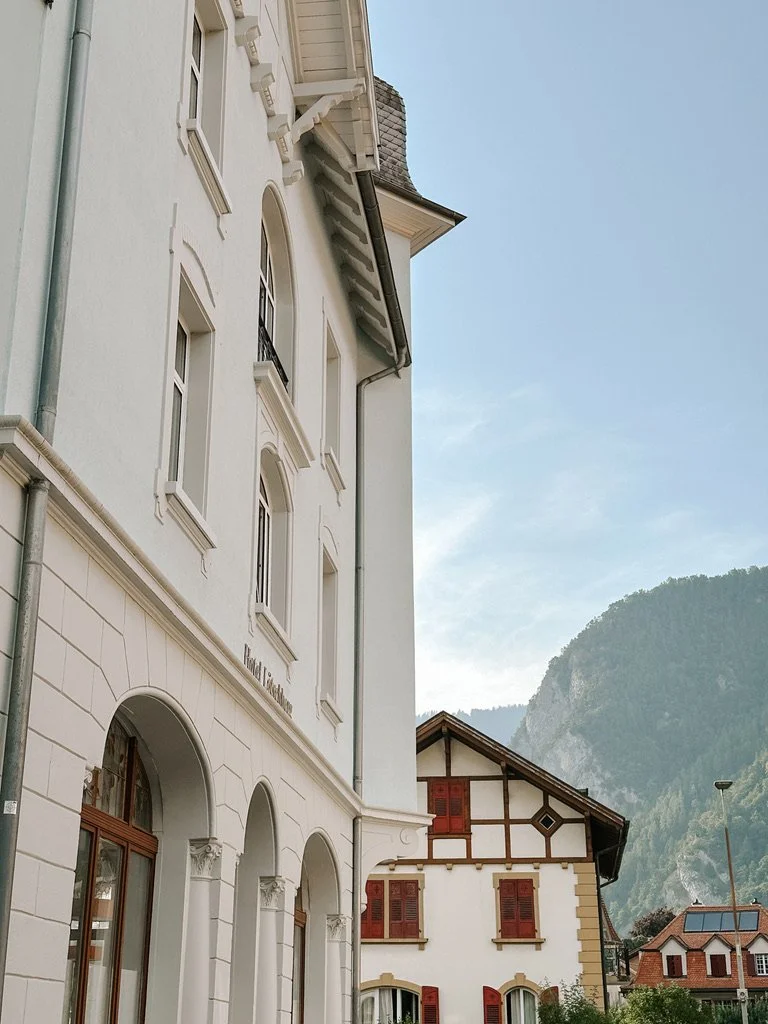
It worked really well as a logistics hub thanks to its excellent train connections, but if you’re looking for a charming mountain village, I’d recommend spending as little time here as possible. Interlaken is convenient, but it doesn’t have the same character as places like Mürren or Zermatt.
Berggasthaus First
This ended up being one of my favourite stays of the trip.
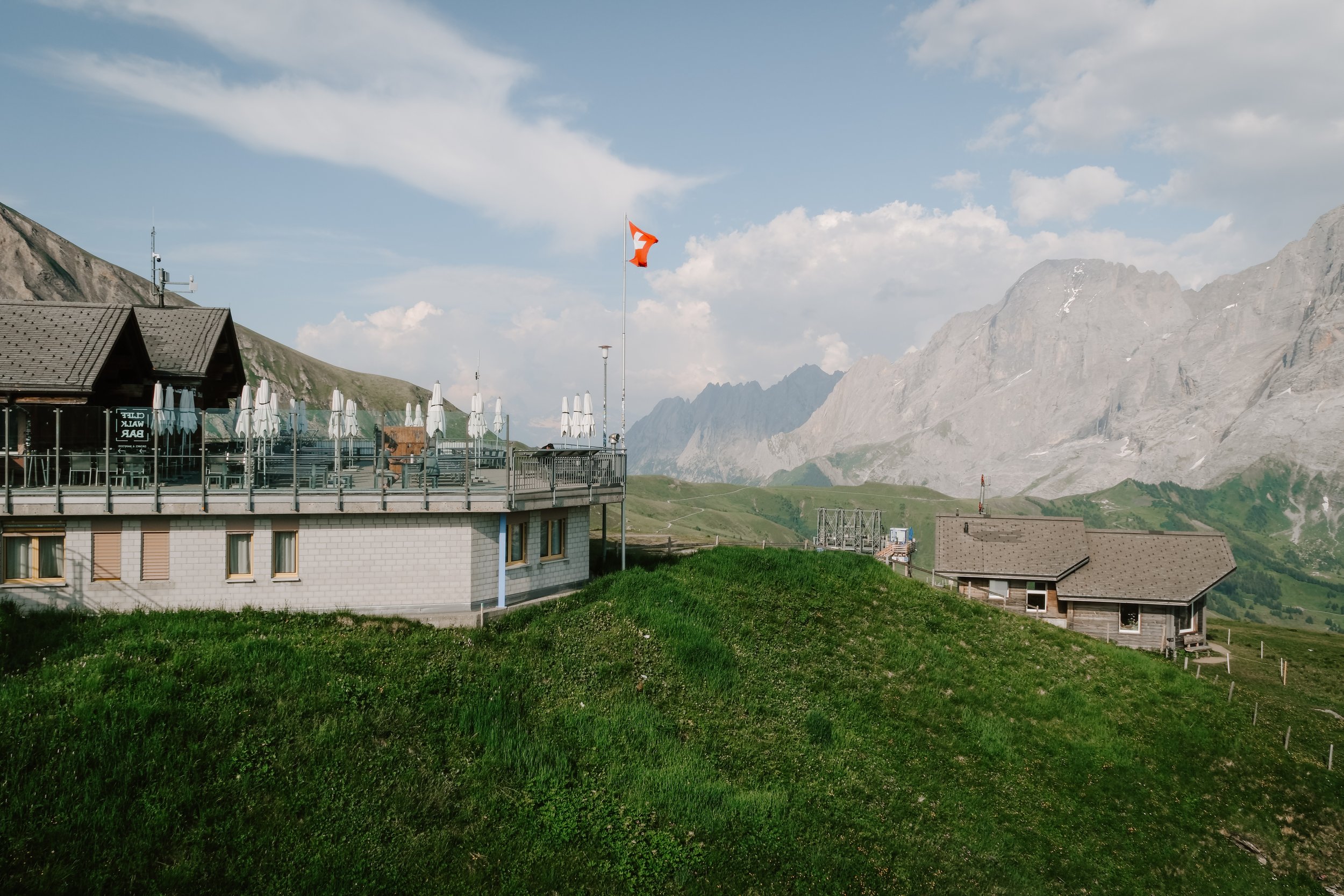
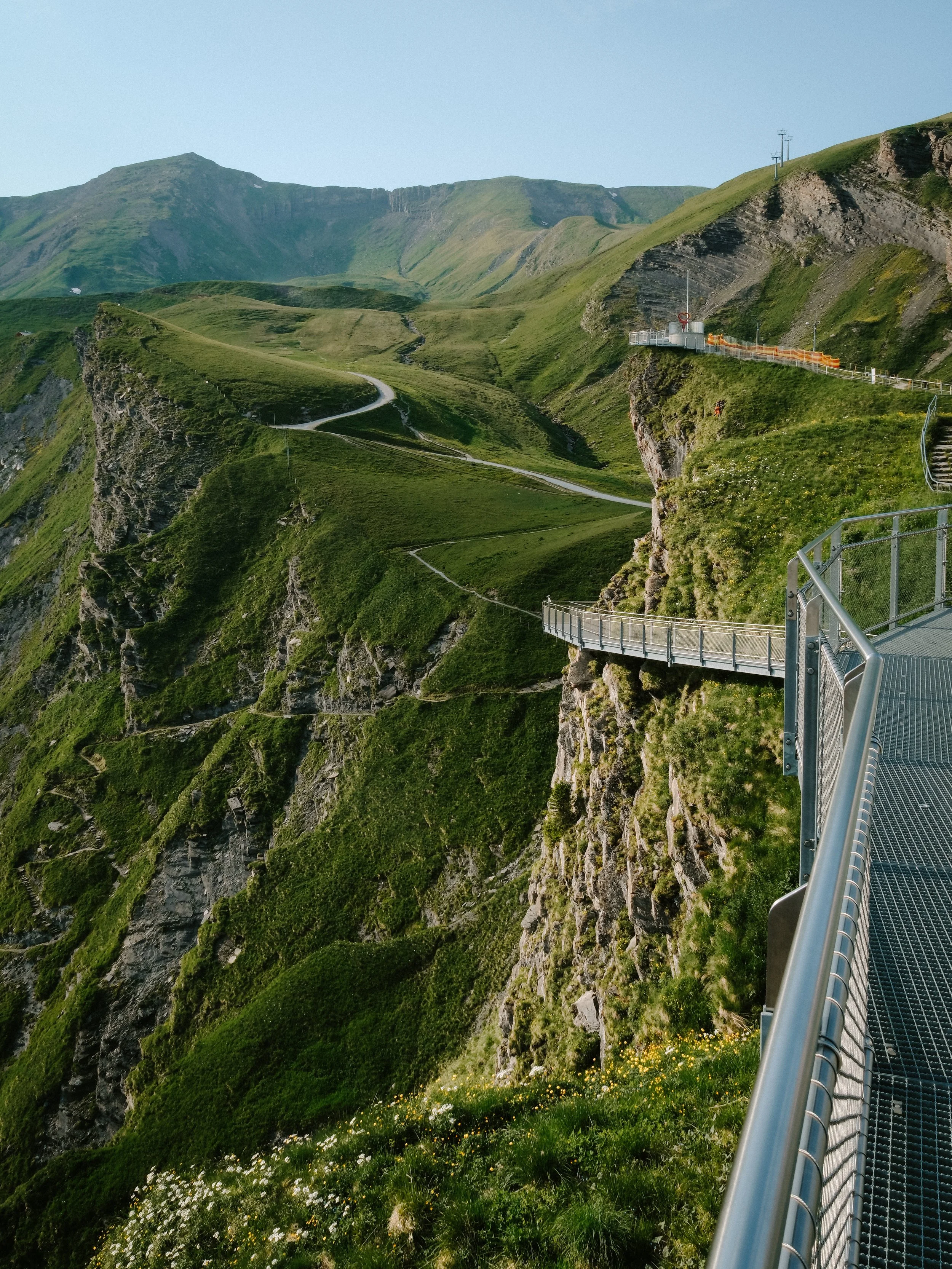
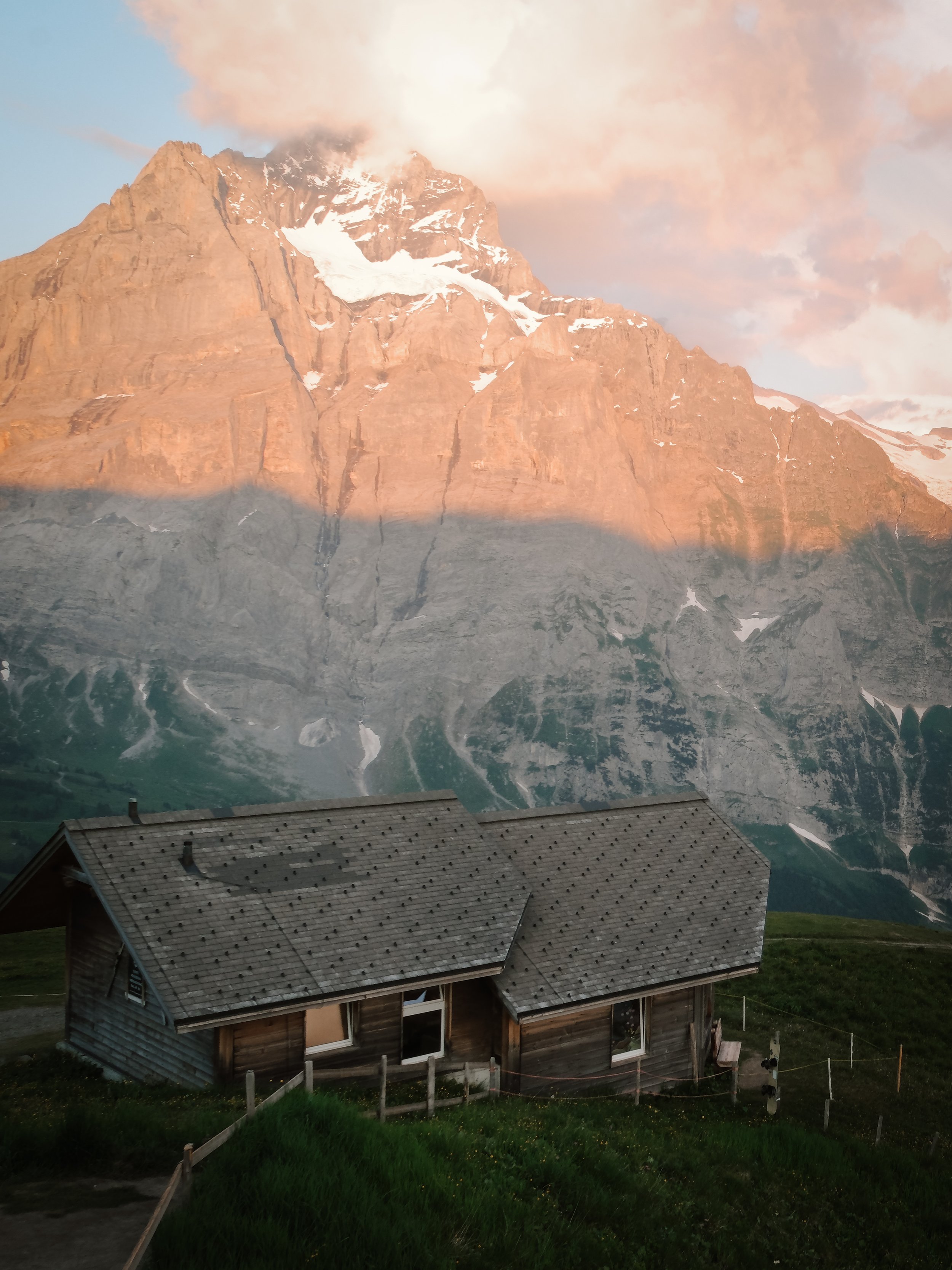
Most visitors take the gondola up to First for a few hours before heading back down, but staying overnight completely changes the experience. Once the last gondola leaves around 7 p.m., the crowds disappear and the mountain becomes incredibly peaceful.
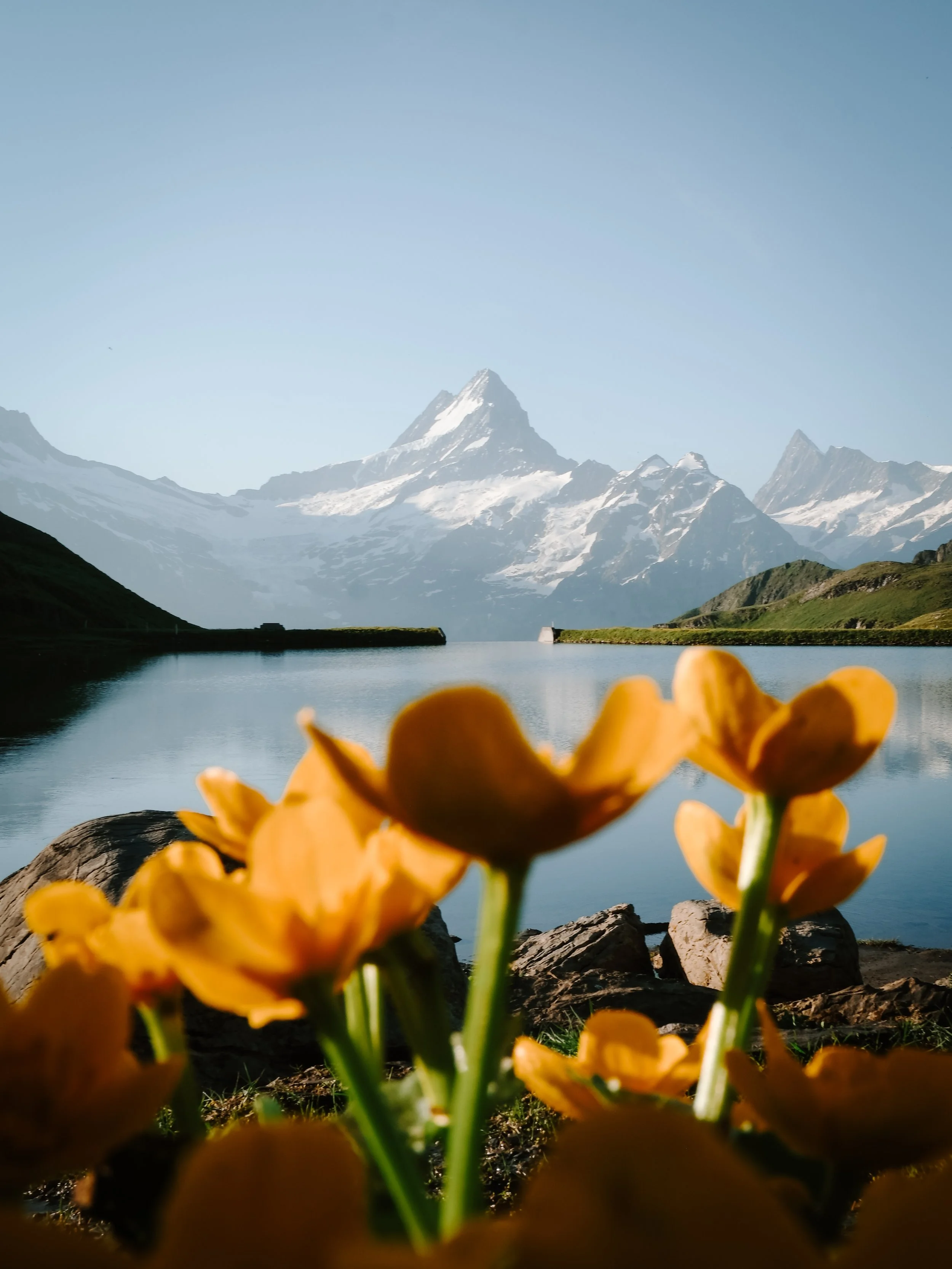
We stayed in a private room, watched the sunset from the mountain, and walked to Bachalpsee before breakfast the next morning with almost nobody else around.
If your budget allows, I think this is one of the best overnight experiences in the Jungfrau Region.
Would I stay here again? Without hesitation.
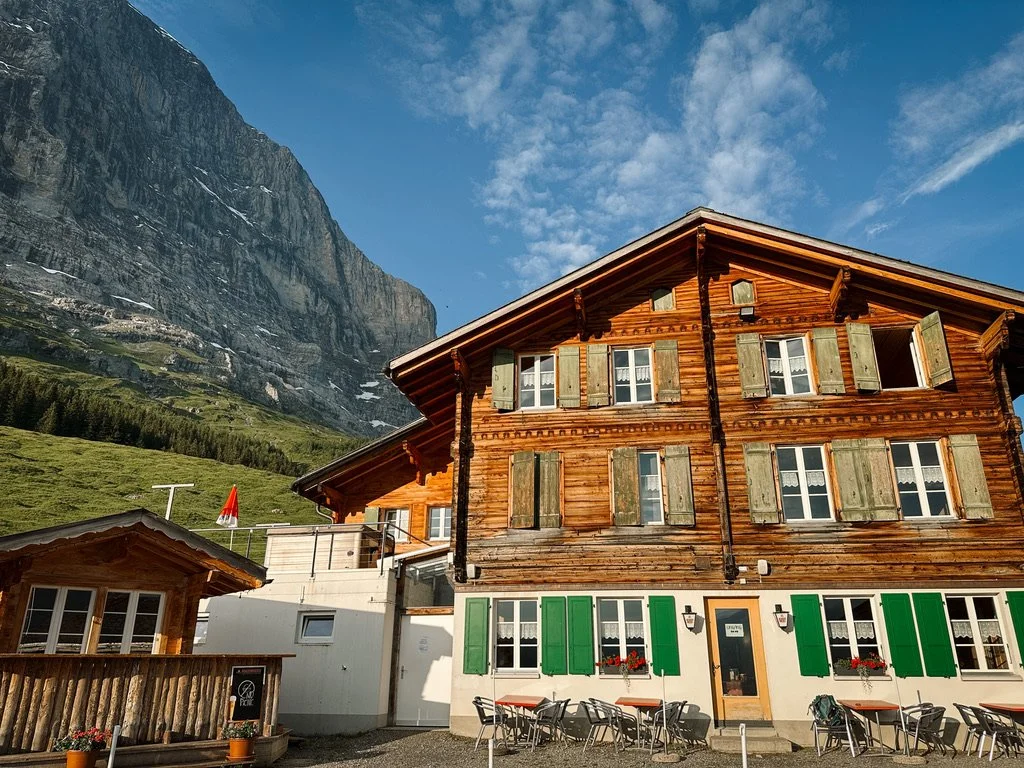
Berghaus Alpiglen
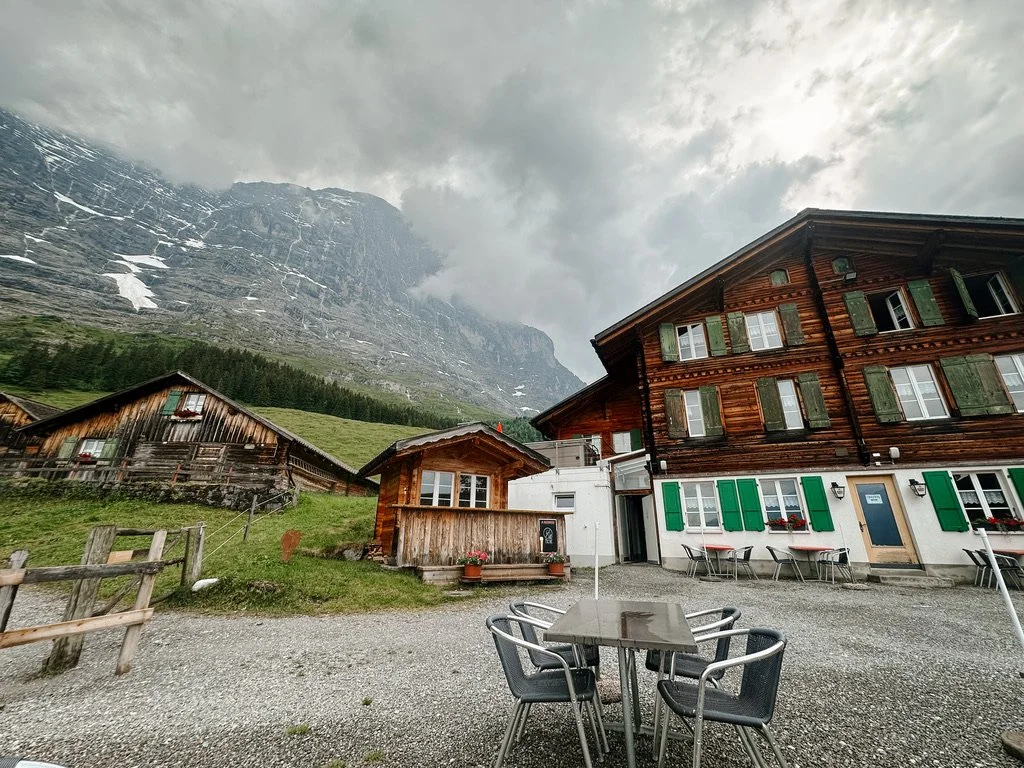
Our stay at Alpiglen will always be memorable because of the weather.
After getting caught in heavy rain, hail and thunderstorms during the final 45 minutes of hiking, we arrived absolutely soaked along with several other hikers. Thankfully, mountain huts are built for exactly these moments.
Once the storm passed, we were treated to a spectacular sunset, and watching waterfalls cascade down the face of the Eiger the following morning was something I’ll never forget.
Would I stay here again? Absolutely.
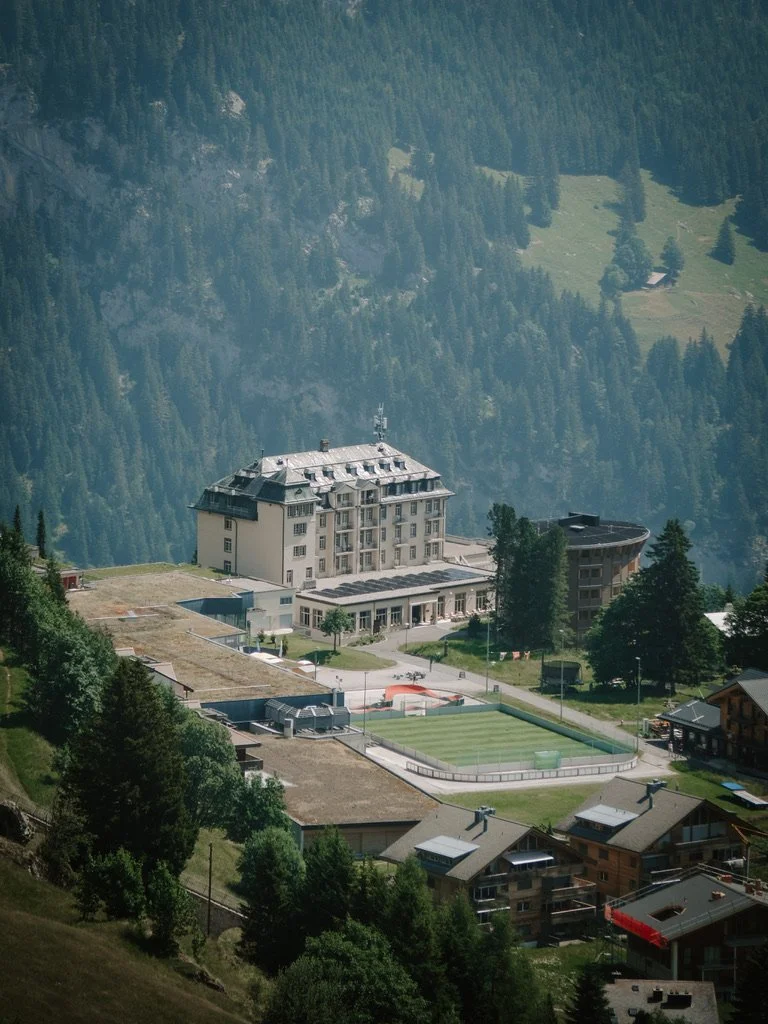
Mürren Palace Hotel
If I had to choose one hotel from the entire trip, this would probably be it.
After several days on the trail, arriving early enough to spend the afternoon in the spa felt like a luxury. The plunge pool, saunas and infrared heated loungers were exactly what my legs needed before another big hiking day.
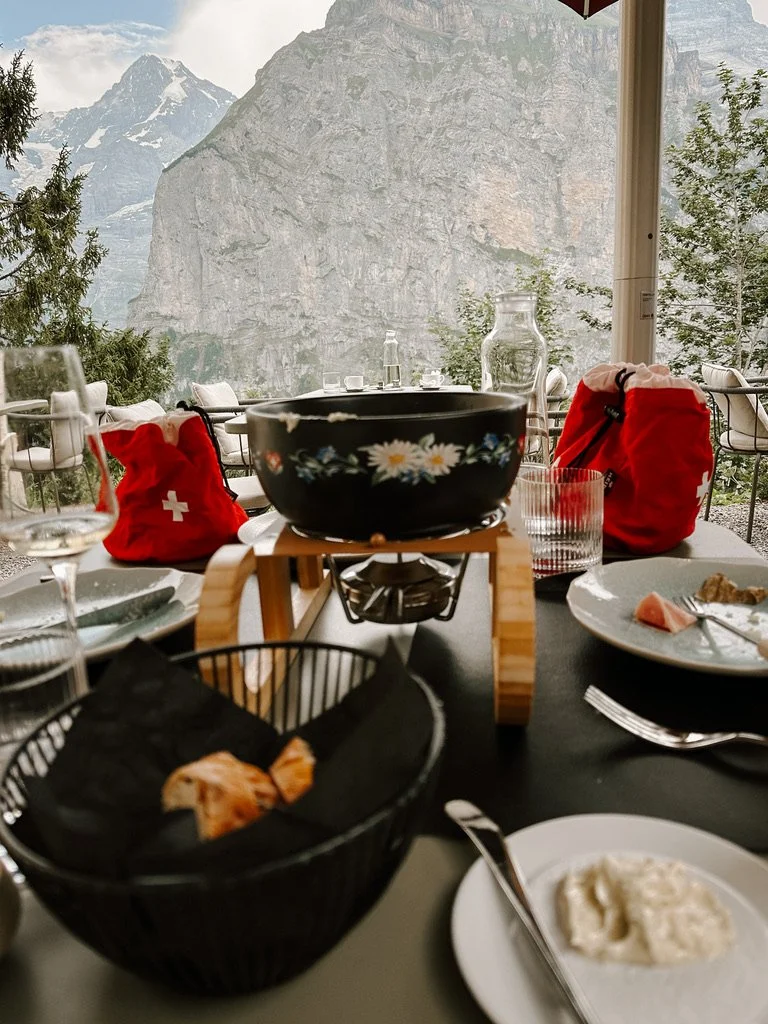
The hotel restaurant also served one of my favourite meals of the trip—an incredible cheese fondue paired with one of the best non-alcoholic sparkling rosés I’ve had.
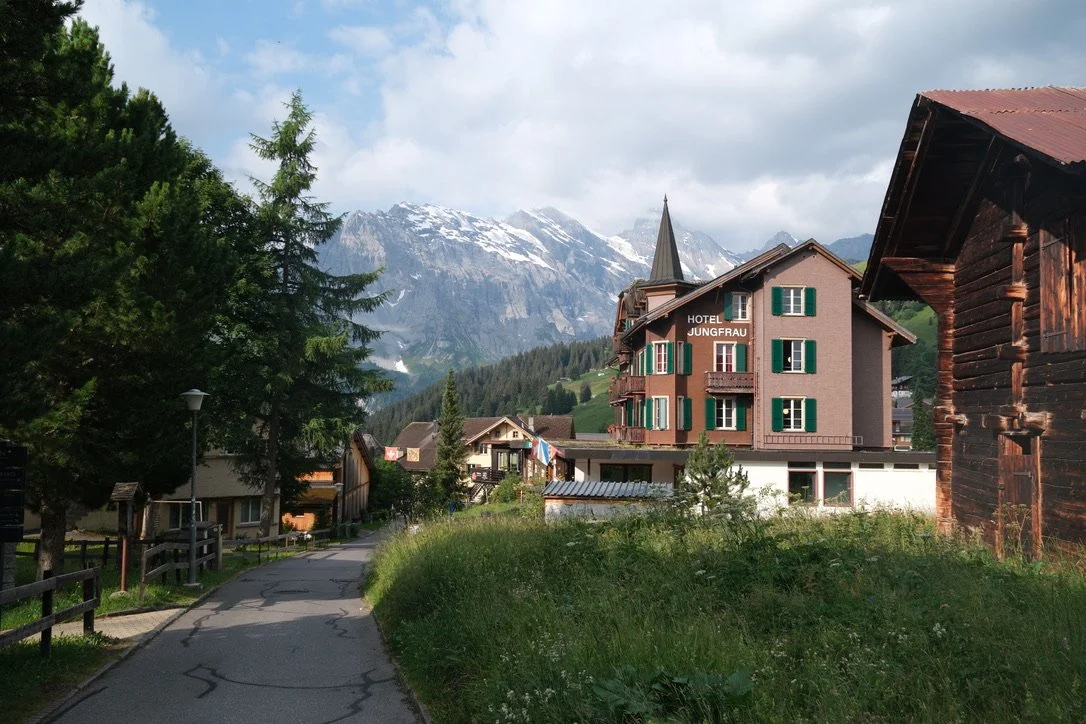
Even without the hotel, I’d recommend spending at least a night or two in Mürren. It’s my favourite village in Switzerland.
Would I stay here again? 100%.
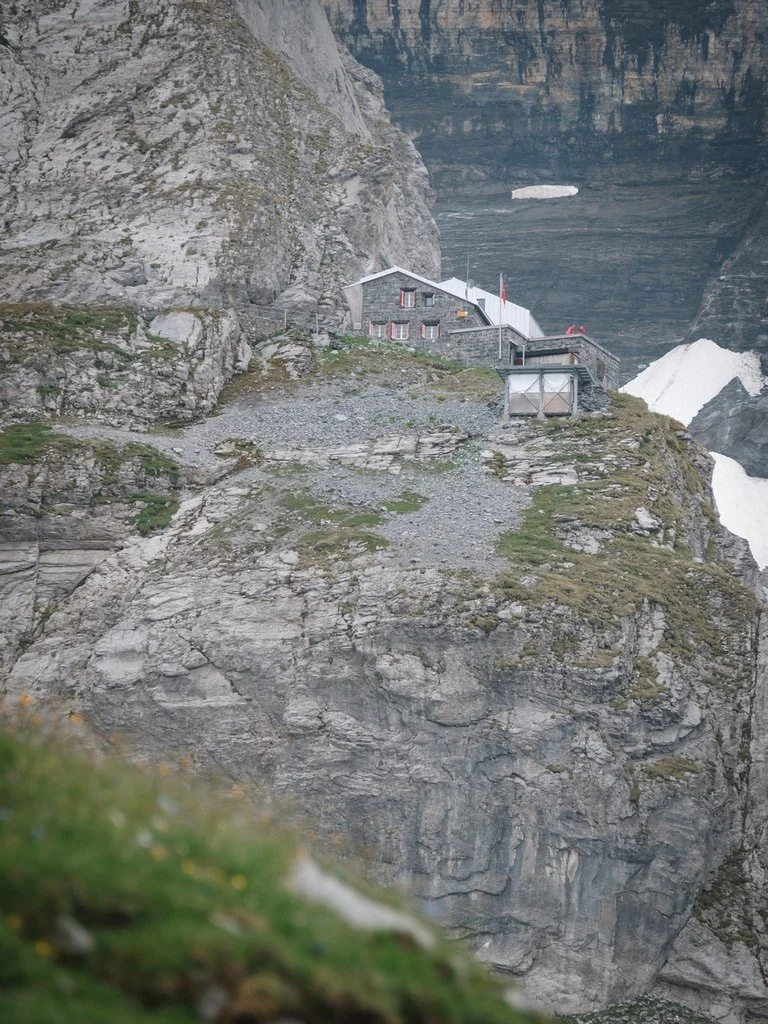
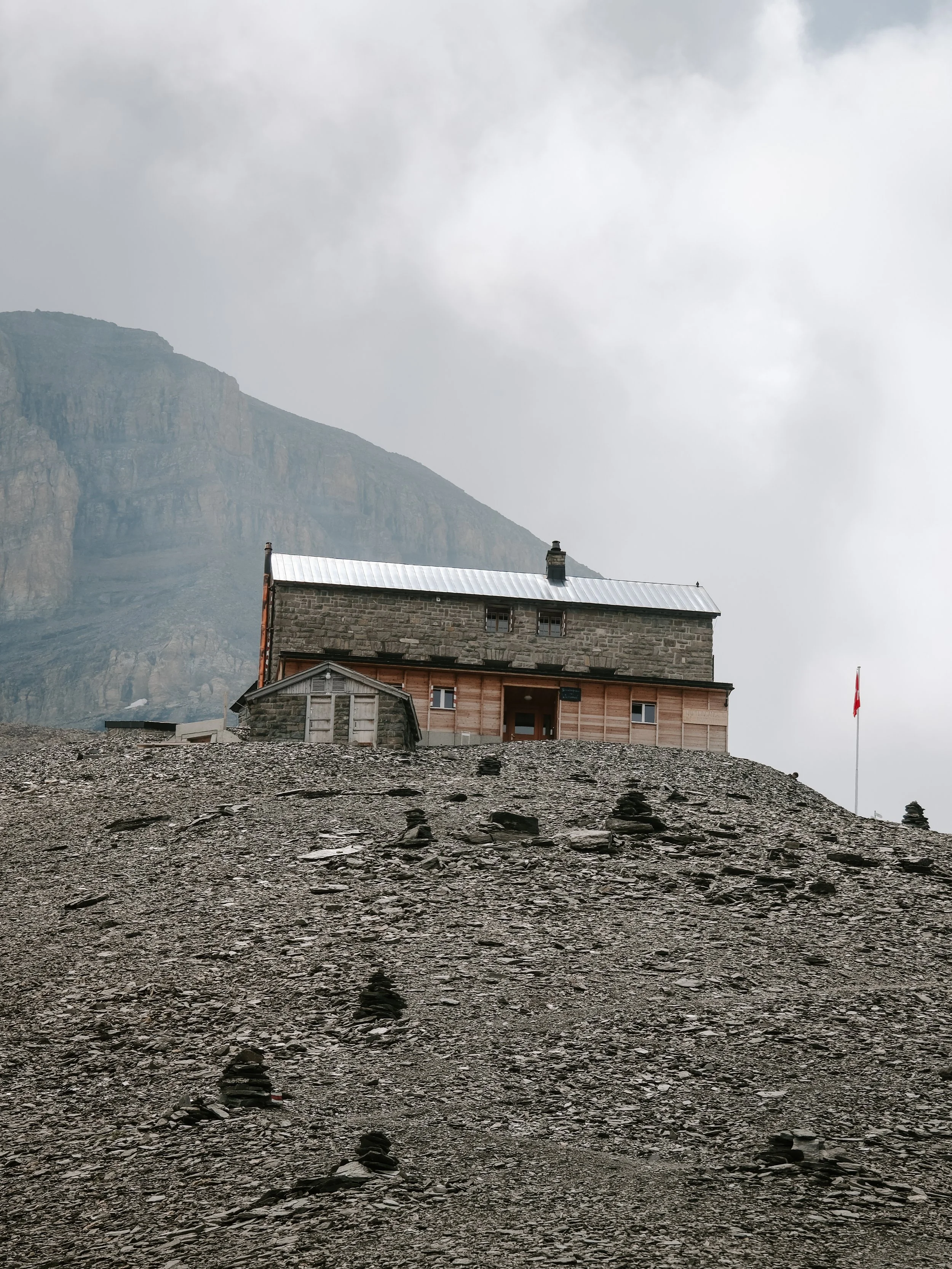
Gspaltenhornhütte
This was probably the coolest mountain hut of the entire trip.
Perched high on the mountainside and dating back to the early 1900s, it feels incredibly remote despite being well equipped.
Like several of our evenings in the Alps, another thunderstorm rolled through shortly after we arrived. By dinner the skies had cleared, and everyone staying at the hut gathered outside to watch the sunset before retreating to our tiny rooms.
Experiences like this are exactly why I want to include even more hut stays next time.
Would I stay here again? Absolutely.
💡 Cassie’s Tip: If you’re planning a hiking-focused trip, I’d recommend alternating between mountain huts and comfortable hotels. The huts become some of your favourite memories, while a good hotel every few days gives you the chance to rest, do laundry and recharge.
Check out my Expedia Travel Shop for more details!
My Favourite Hikes, Viewpoints and Villages
It’s almost impossible to narrow down my favourites, but these are the places I’d recommend without hesitation.
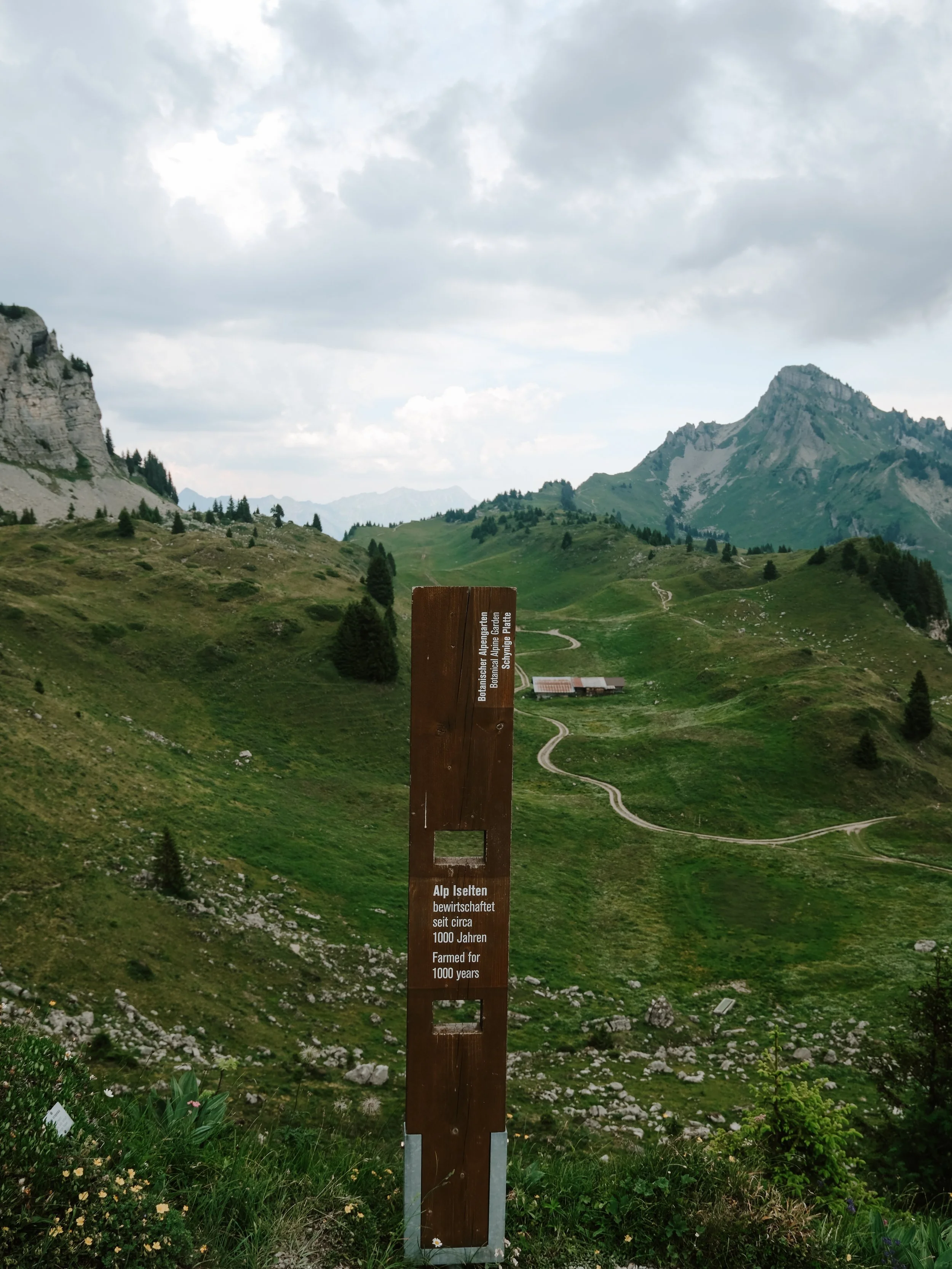
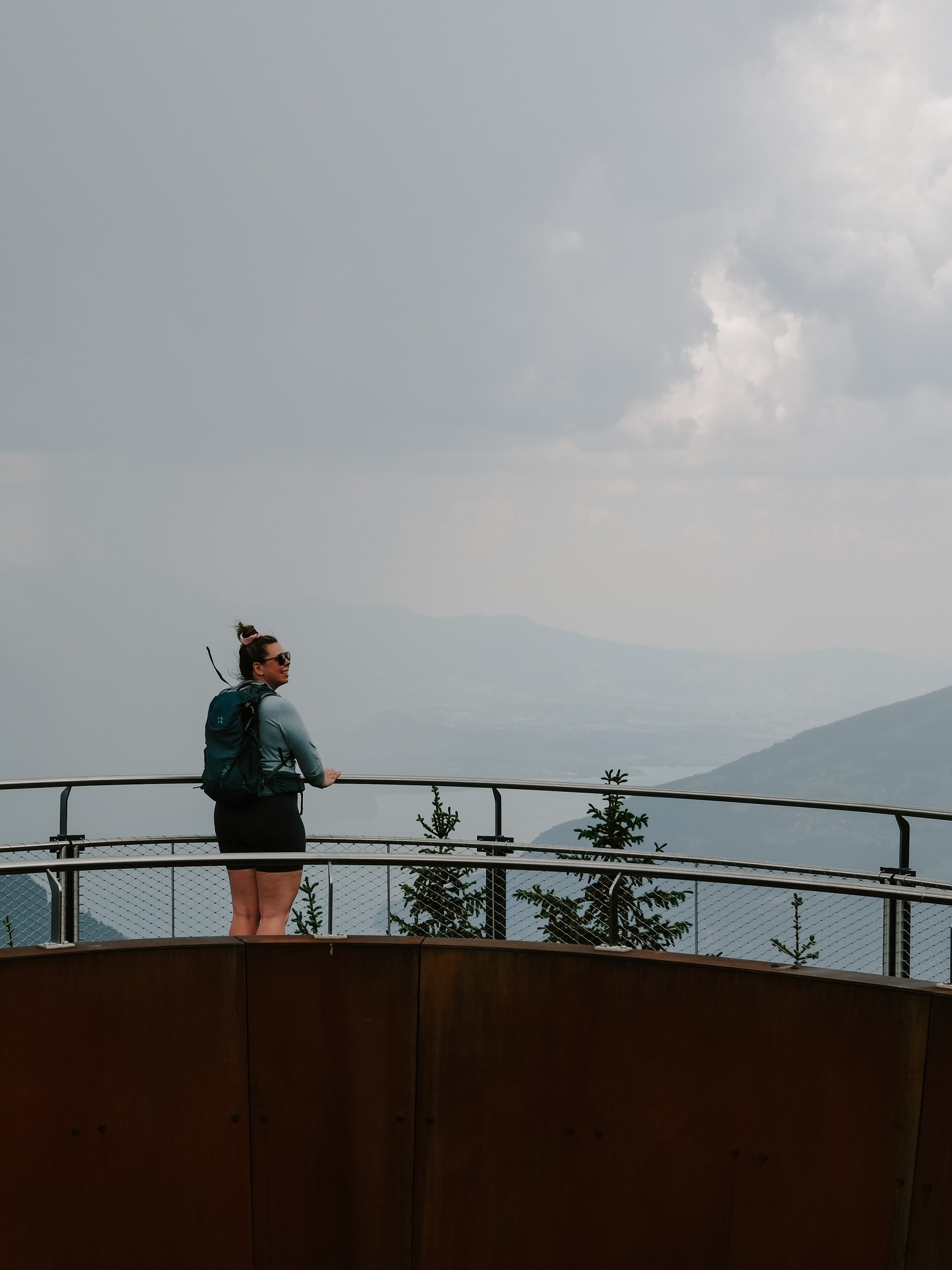
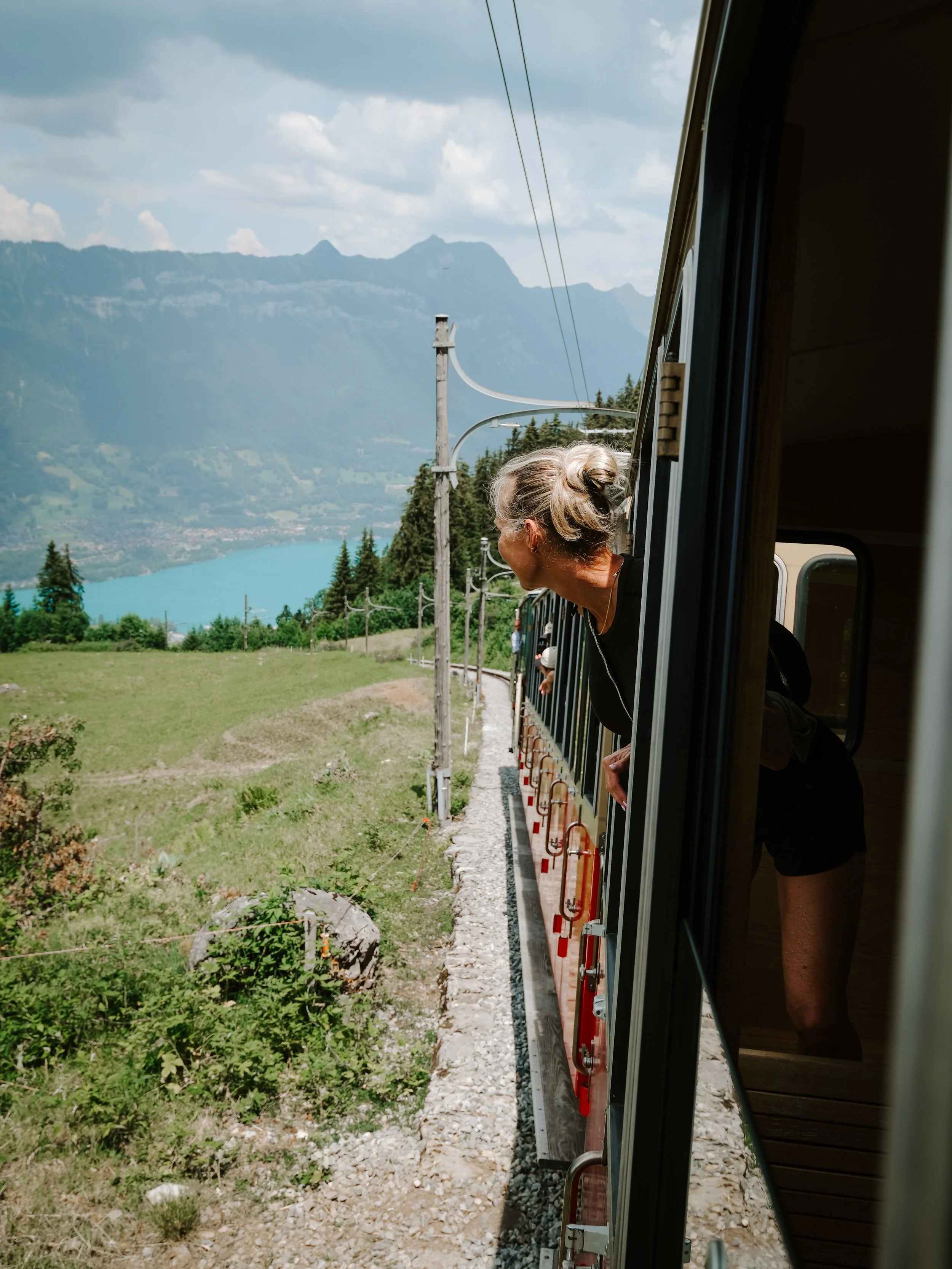
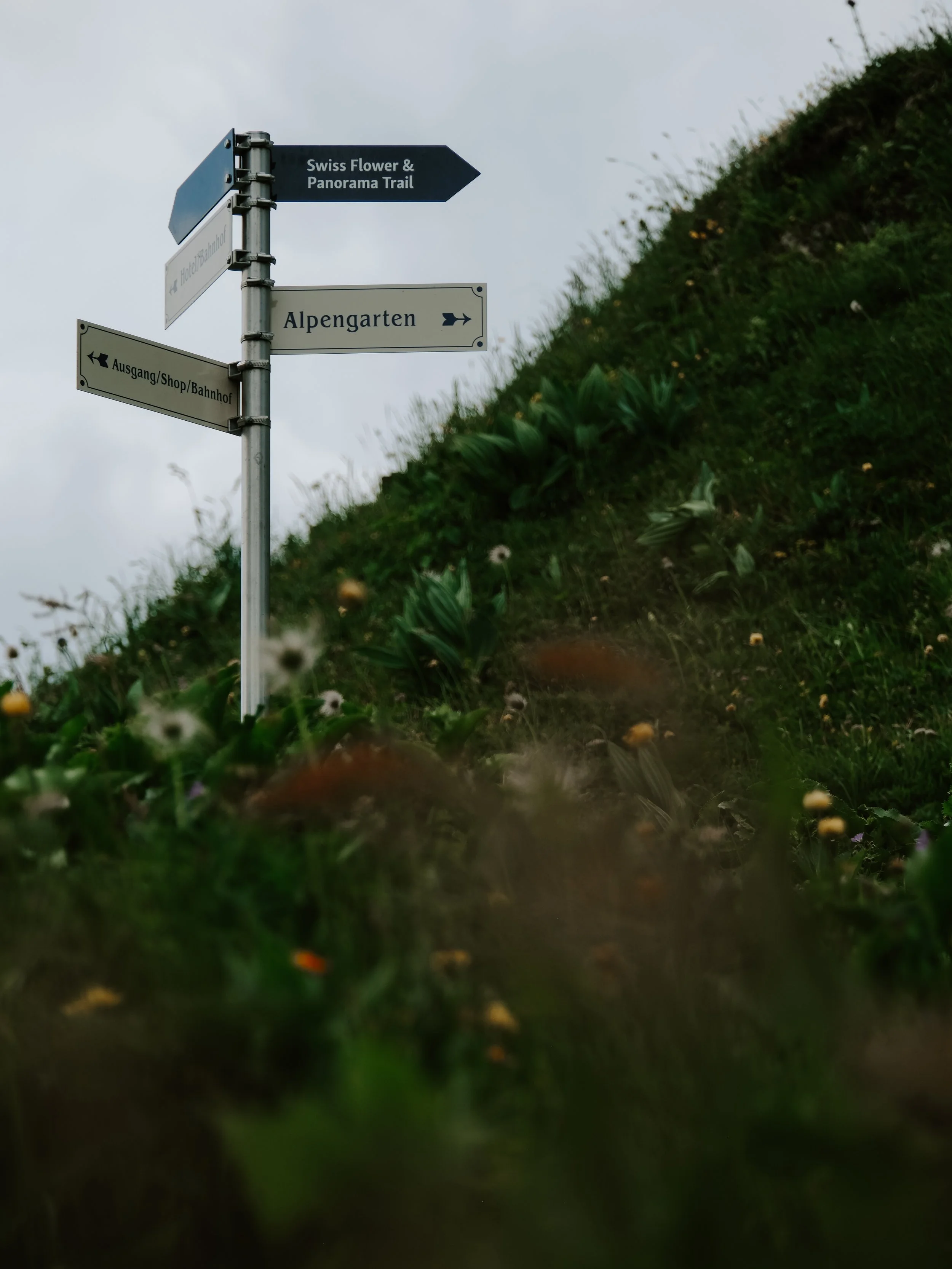
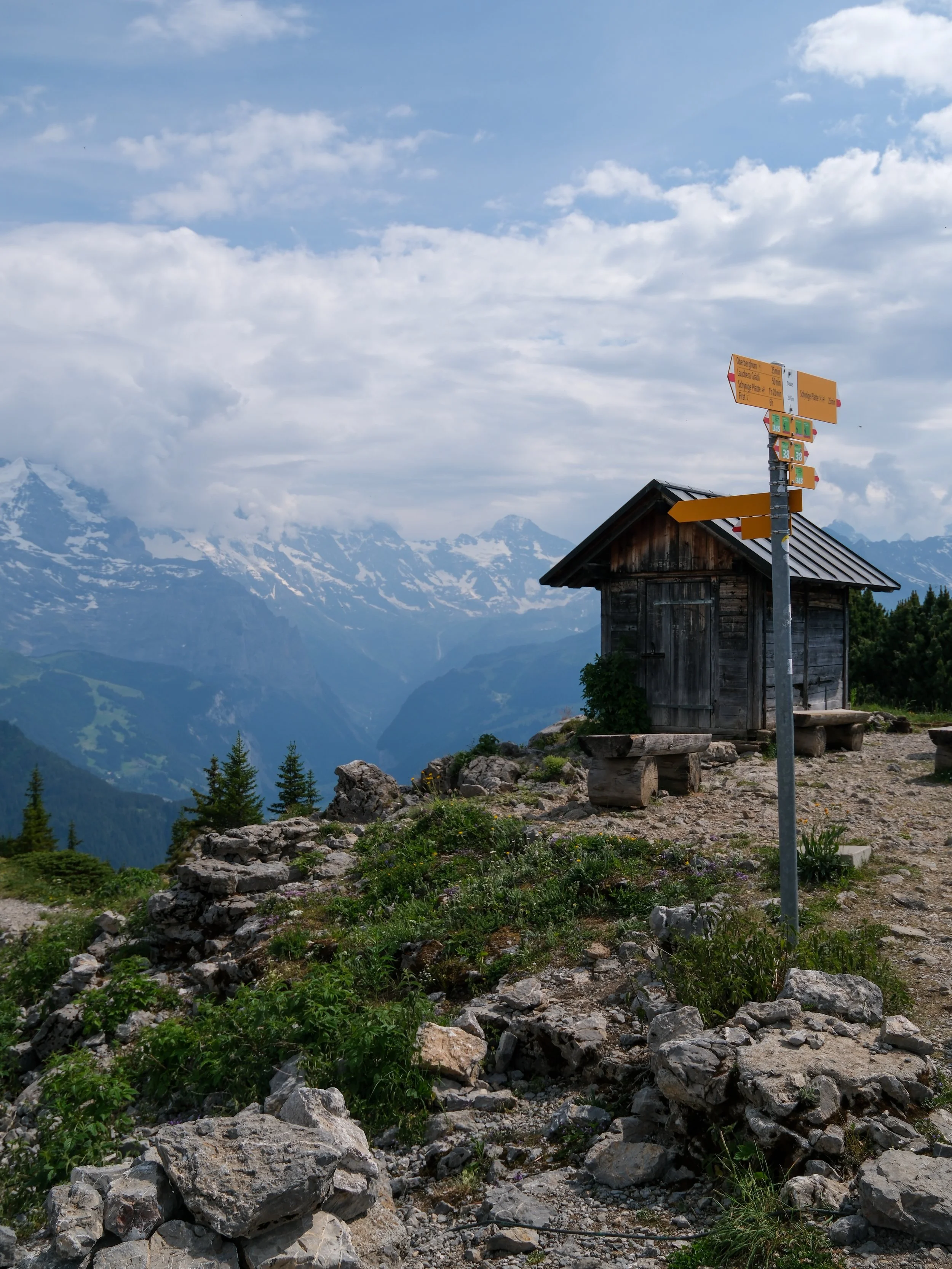
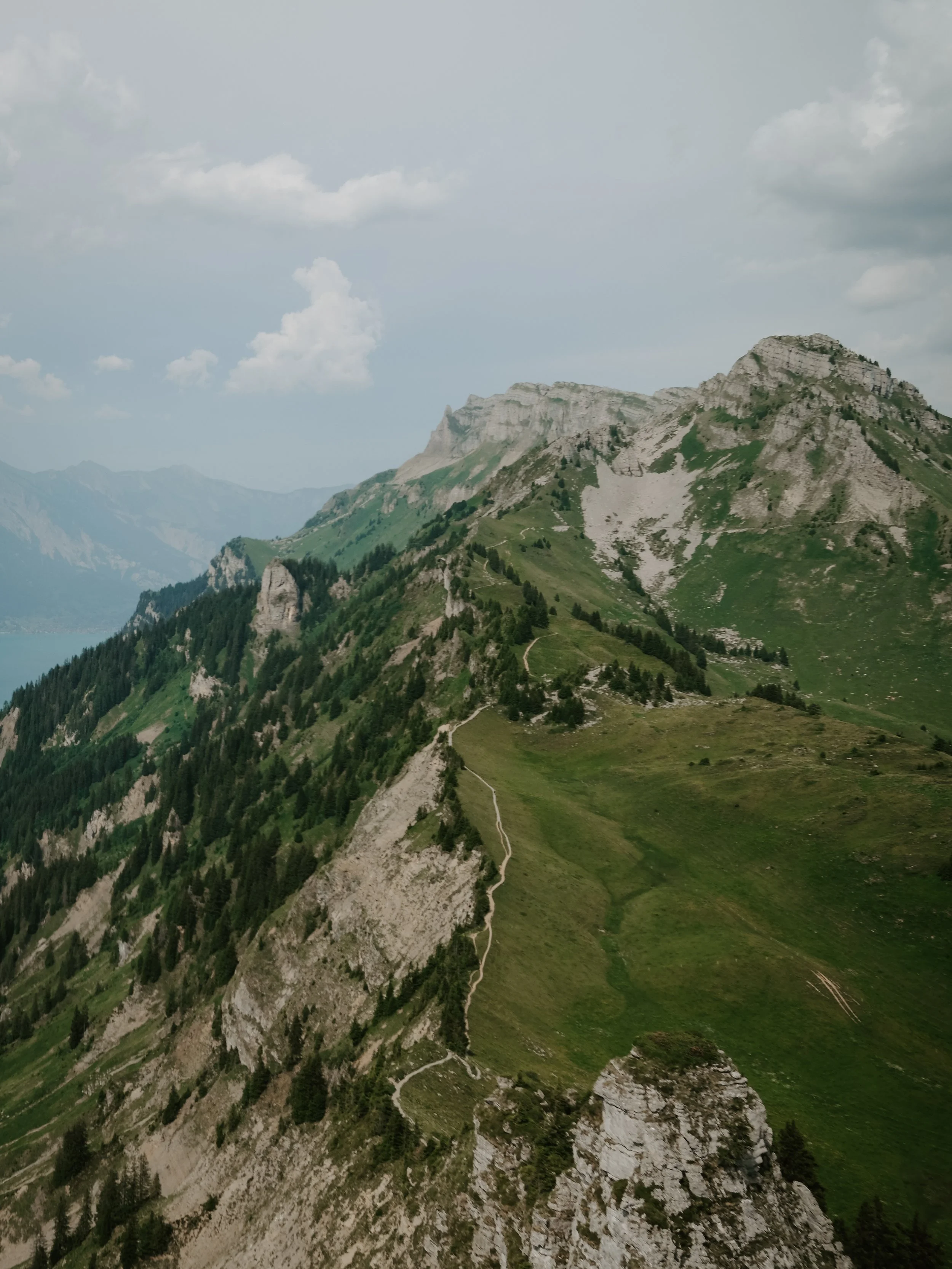
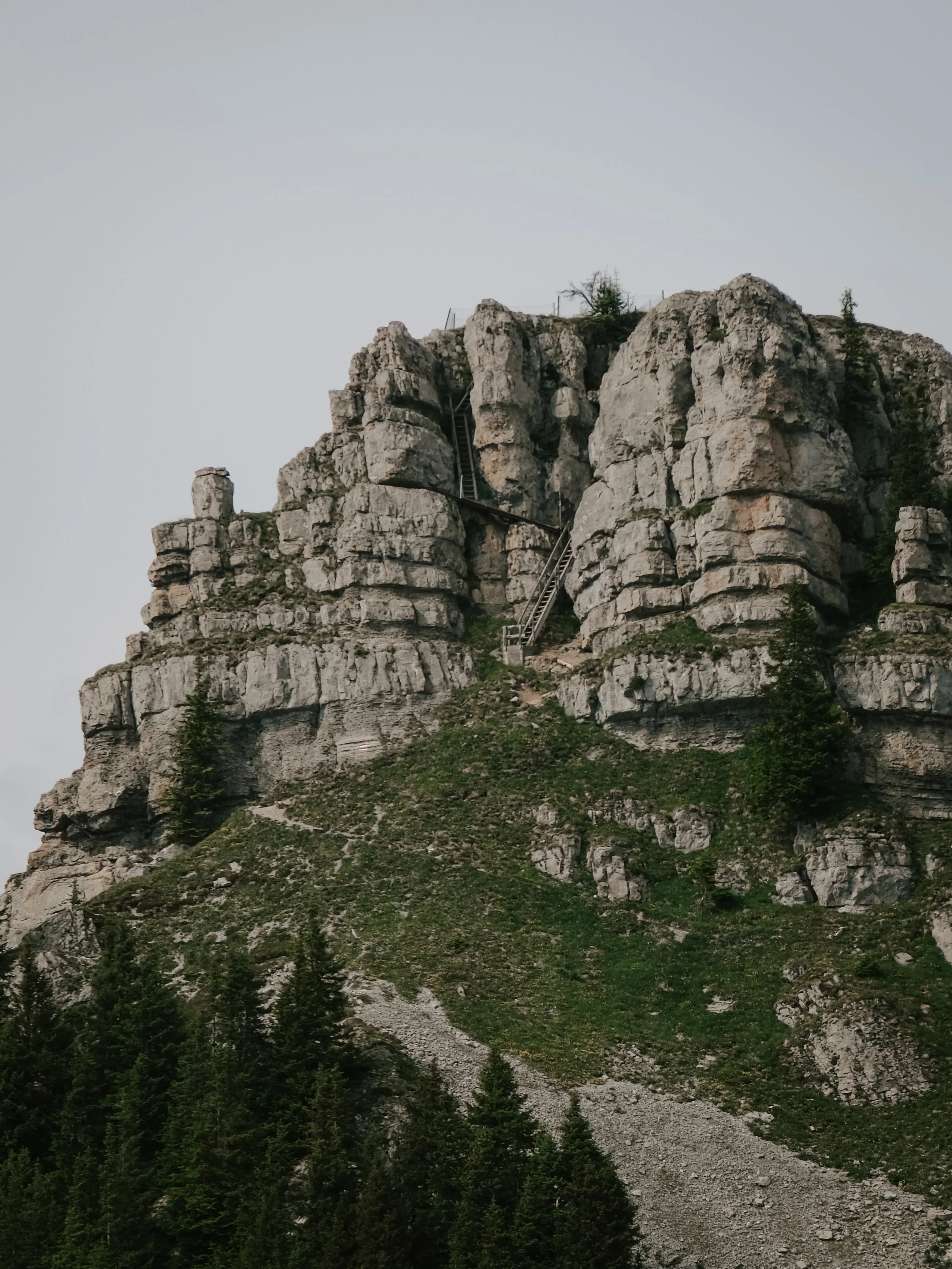
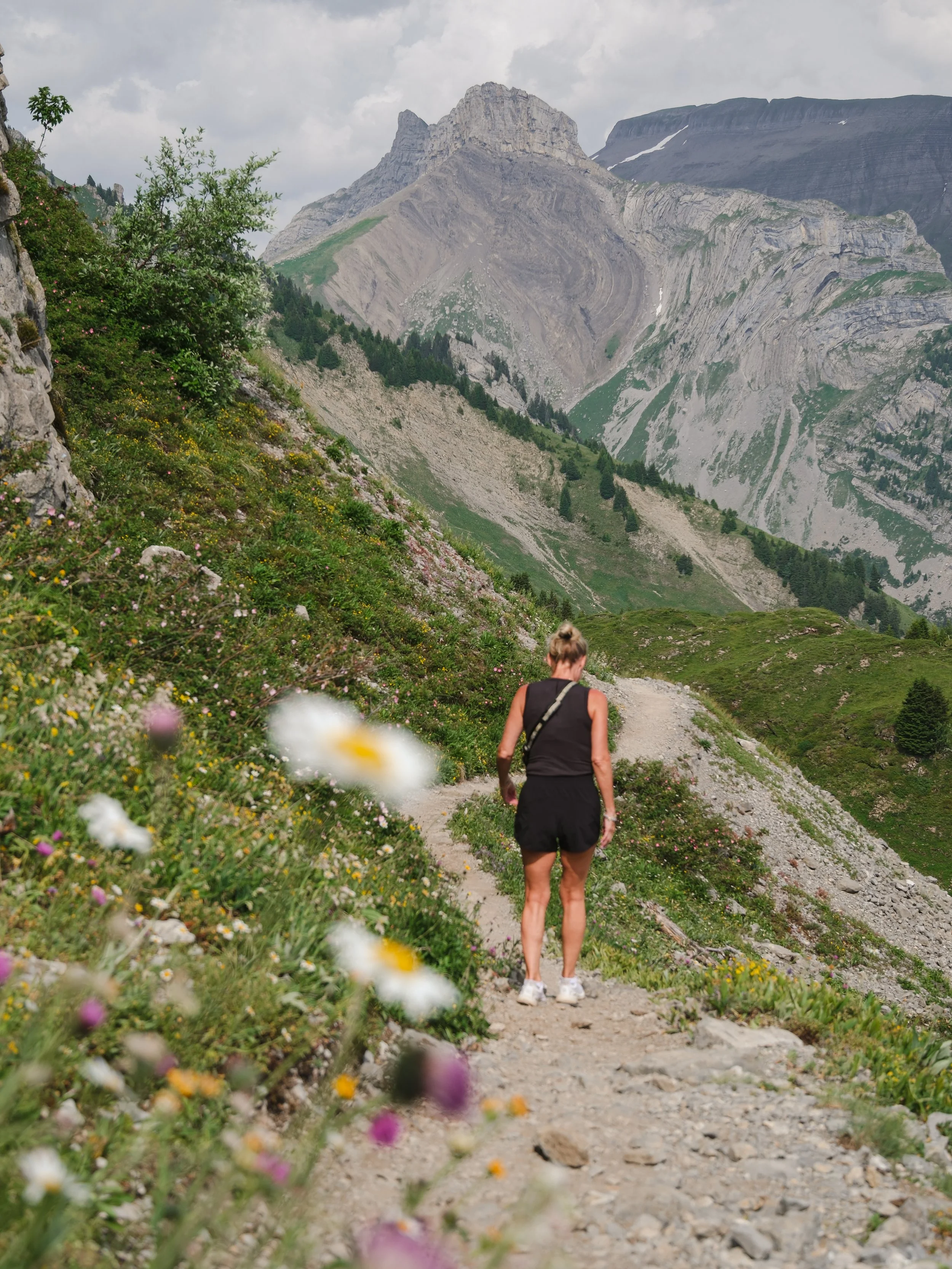
1. Schynige Platte
This was the biggest surprise of our entire trip.
I went in with almost no expectations, and it quickly became one of my favourite places in Switzerland.
The historic cog railway ride is an experience on its own, the Panorama Trail is spectacular, and the climb to Oberberghorn rewards you with incredible ridge views overlooking both Interlaken and the Bernese Alps.
The wildflowers were some of the best we saw anywhere in Switzerland, and perhaps best of all, it was surprisingly quiet.
If I had to choose between Schynige Platte and Harder Kulm, I’d pick Schynige Platte every time.
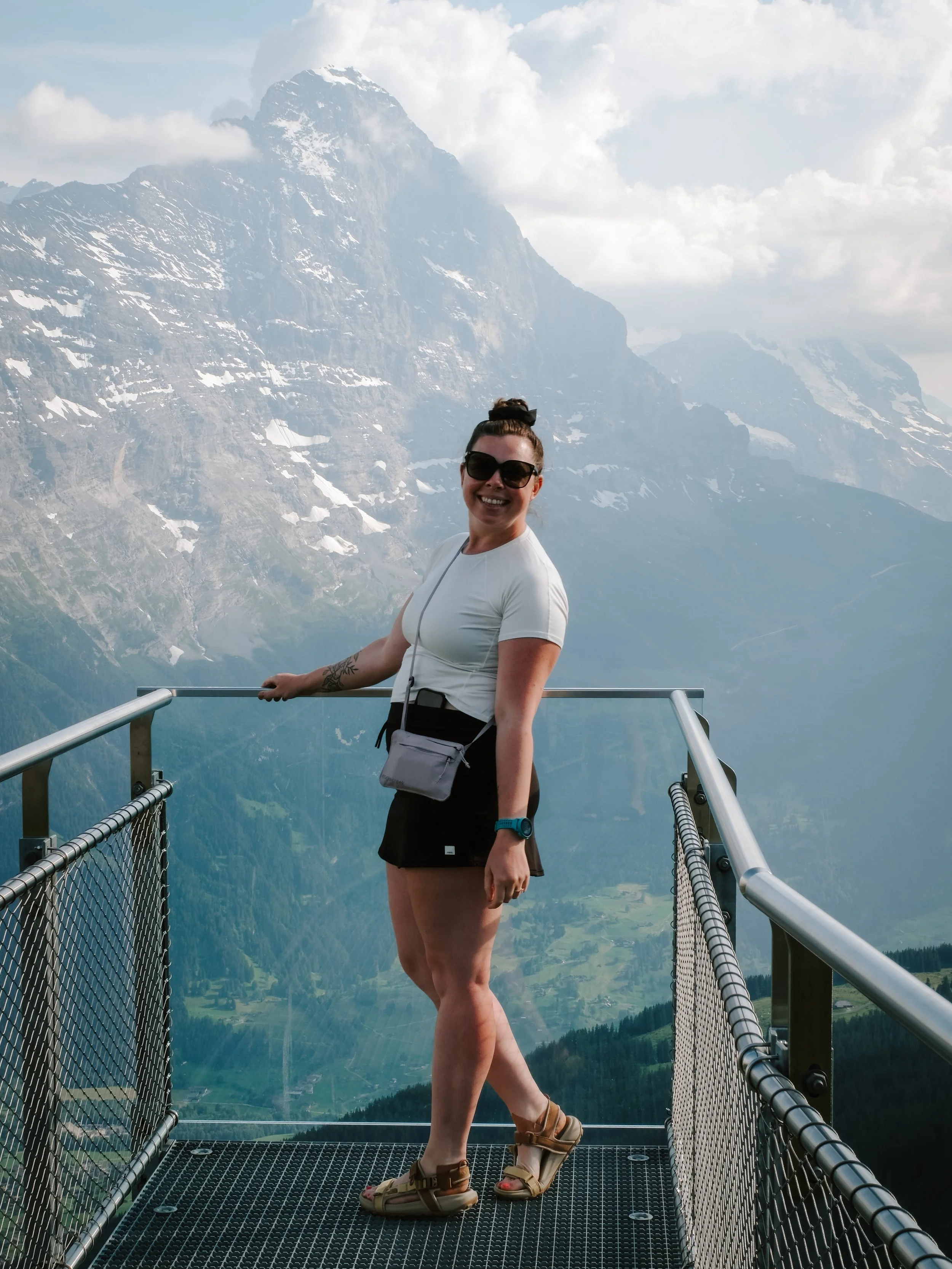
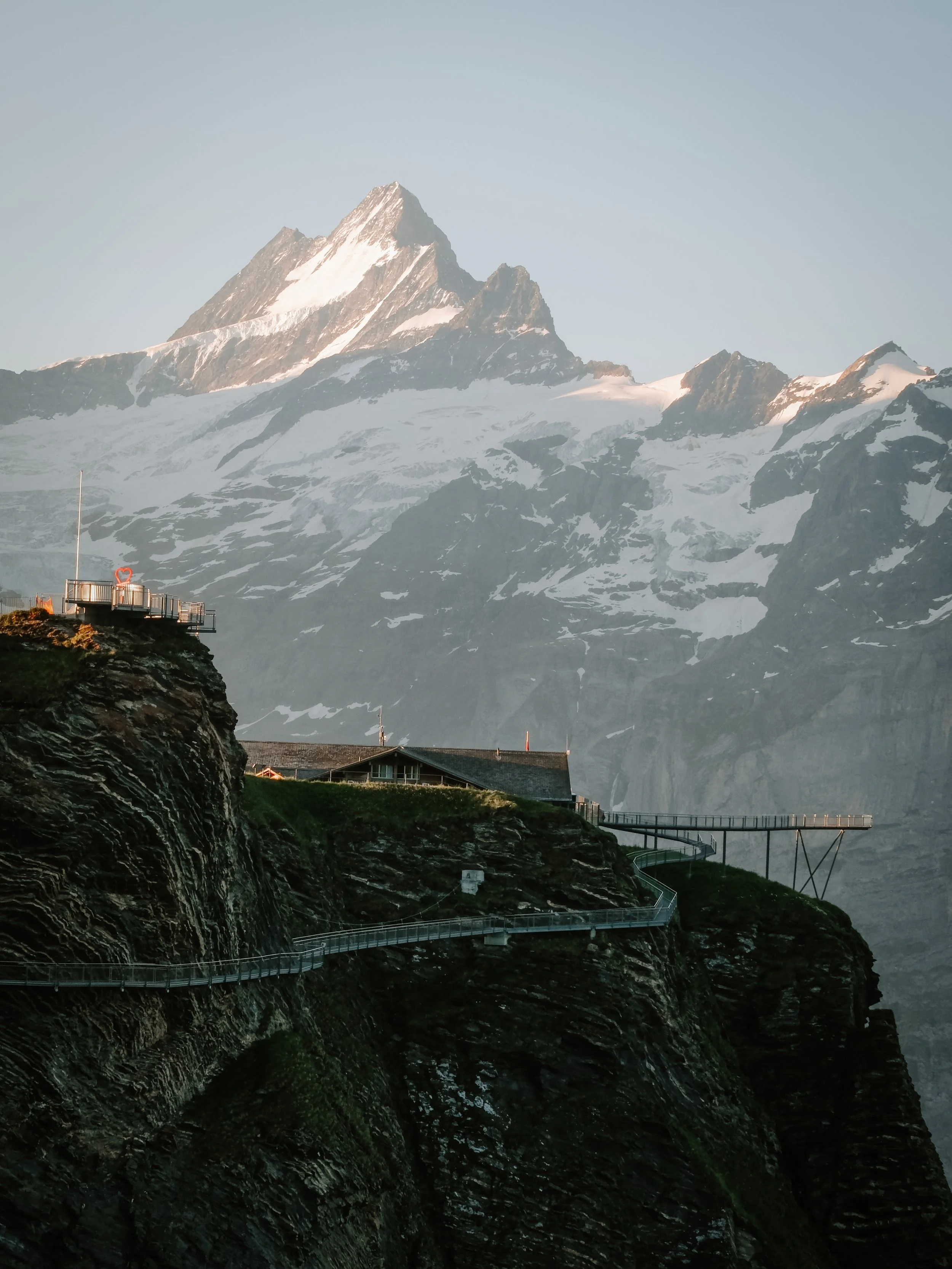
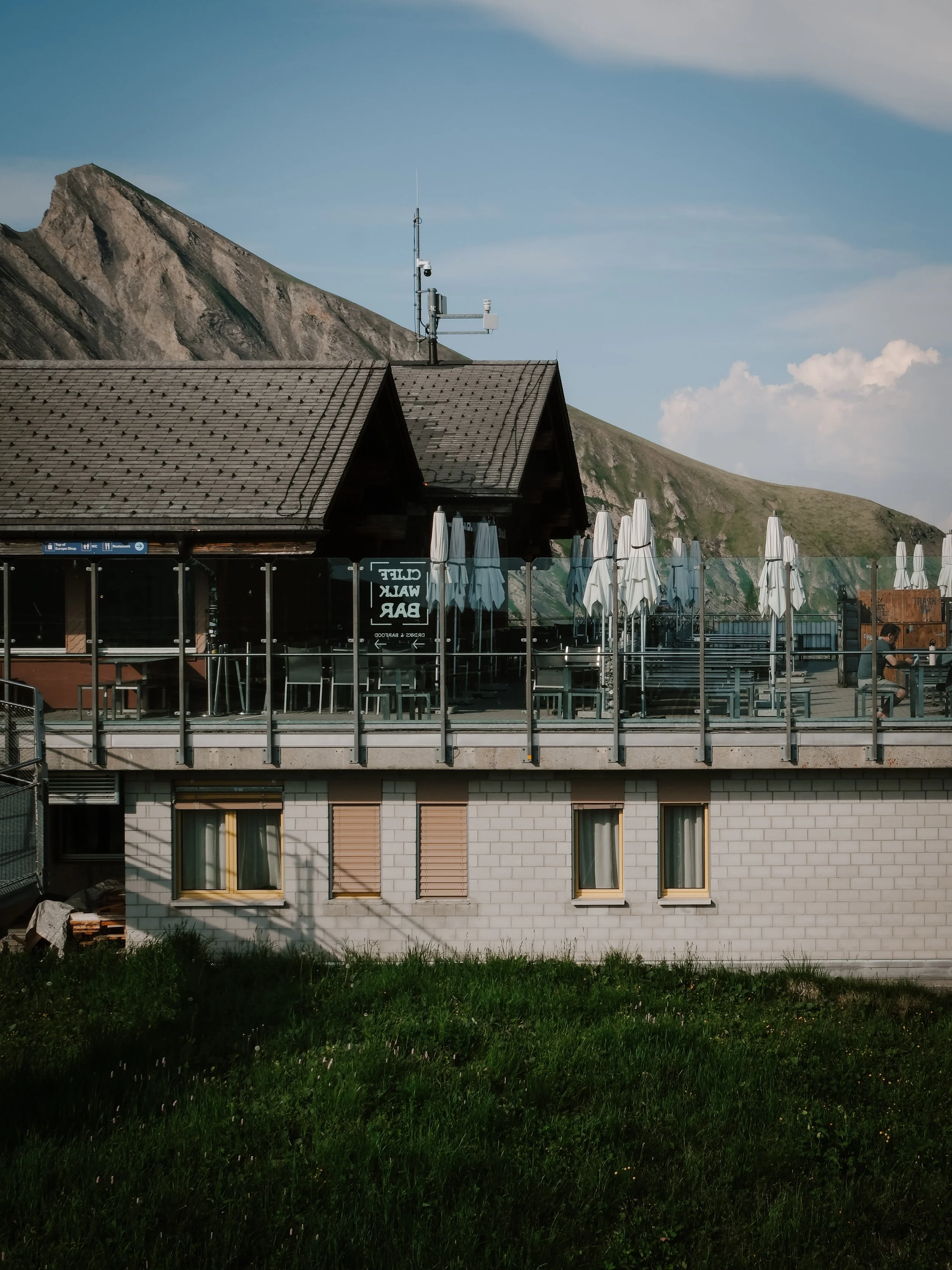
2. Grindelwald First
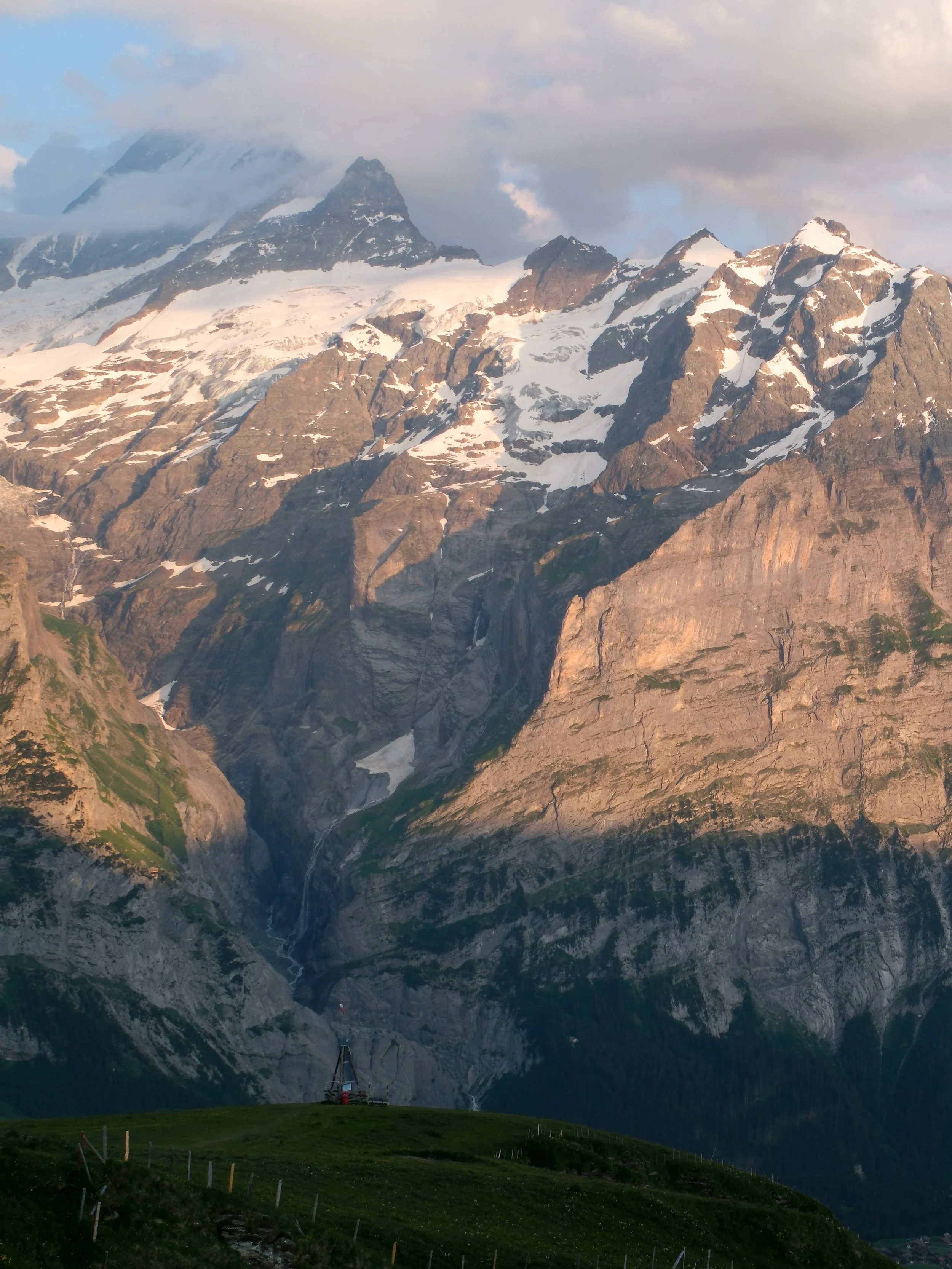
The real magic happens after the crowds leave.
Staying overnight, watching the sunset, and hiking to Bachalpsee before breakfast made this one of the most memorable experiences of our trip.
If you’re only planning a day trip, I’d still recommend visiting—but if you can spend the night, do it.
3. Mürren
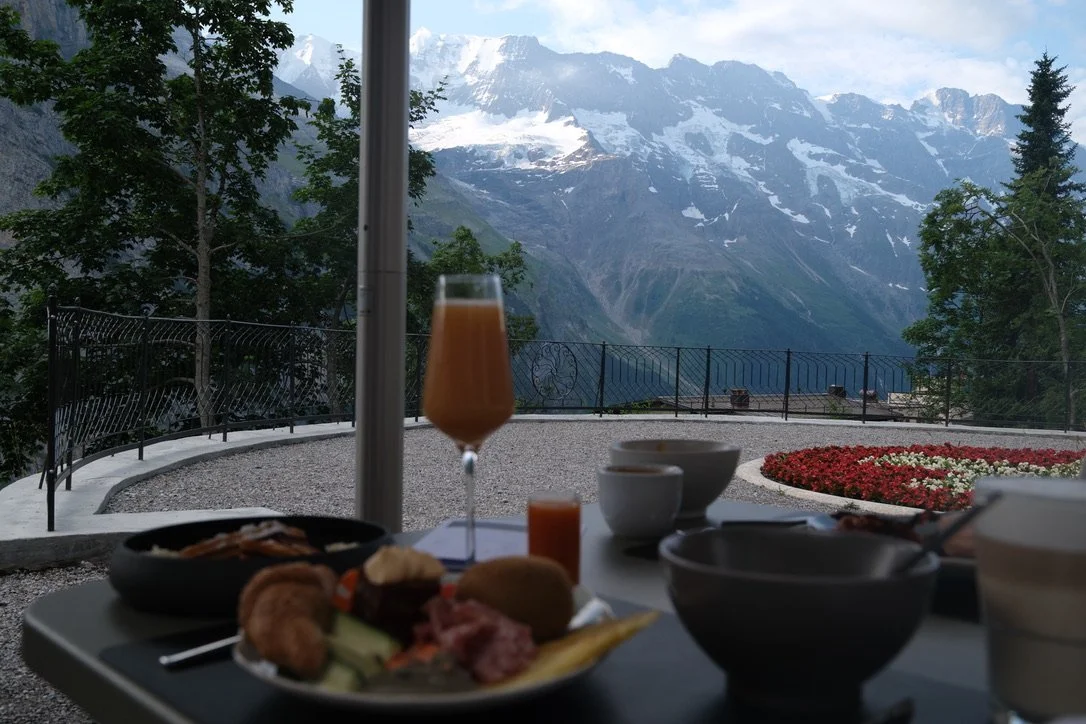
Mürren is exactly what I imagined a Swiss mountain village would be.
Completely car-free, full of traditional chalets and surrounded by incredible hiking, it’s the kind of place where it’s easy to slow down and simply enjoy being there.
Of all the villages we visited, this was my favourite.
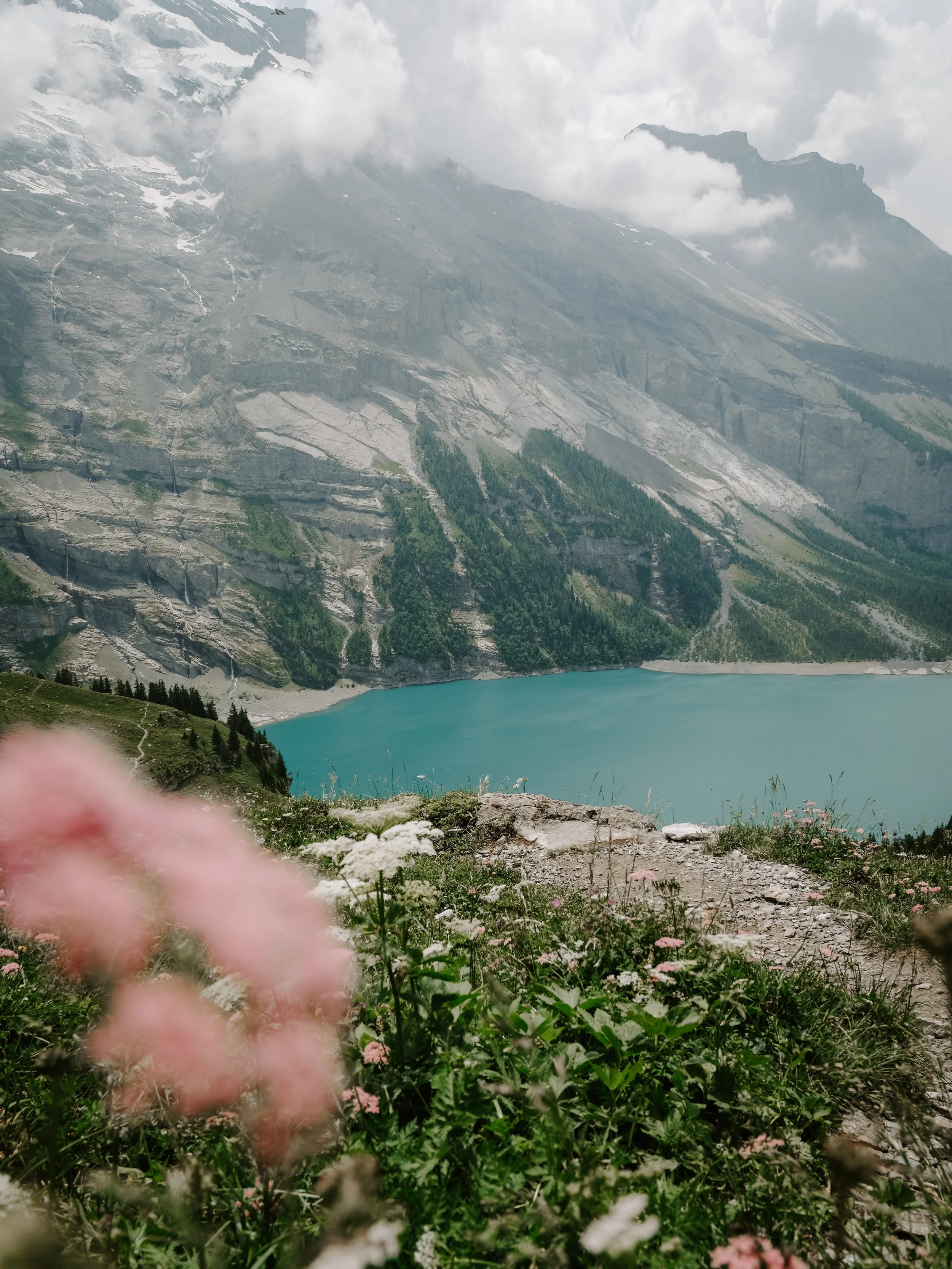
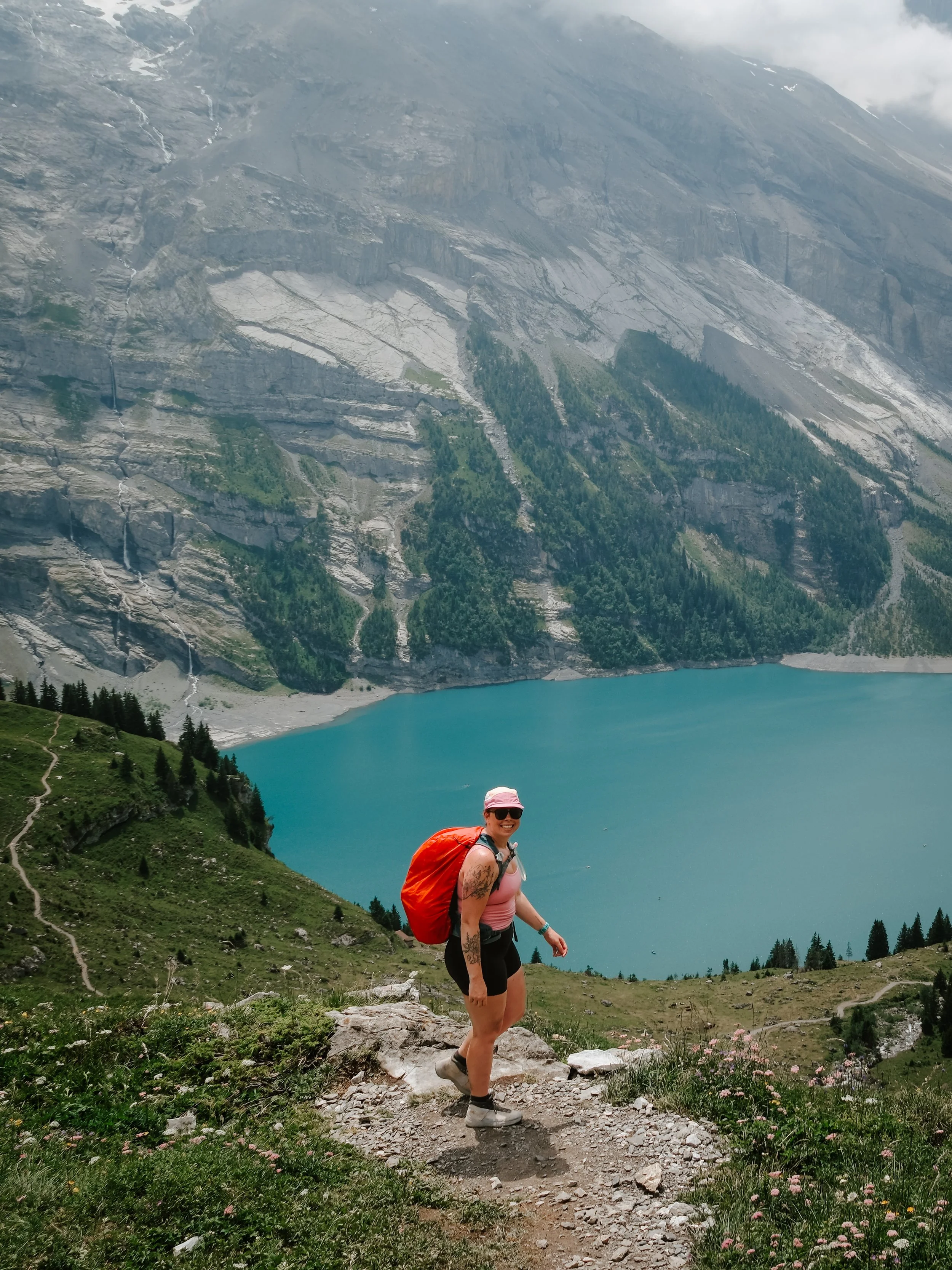
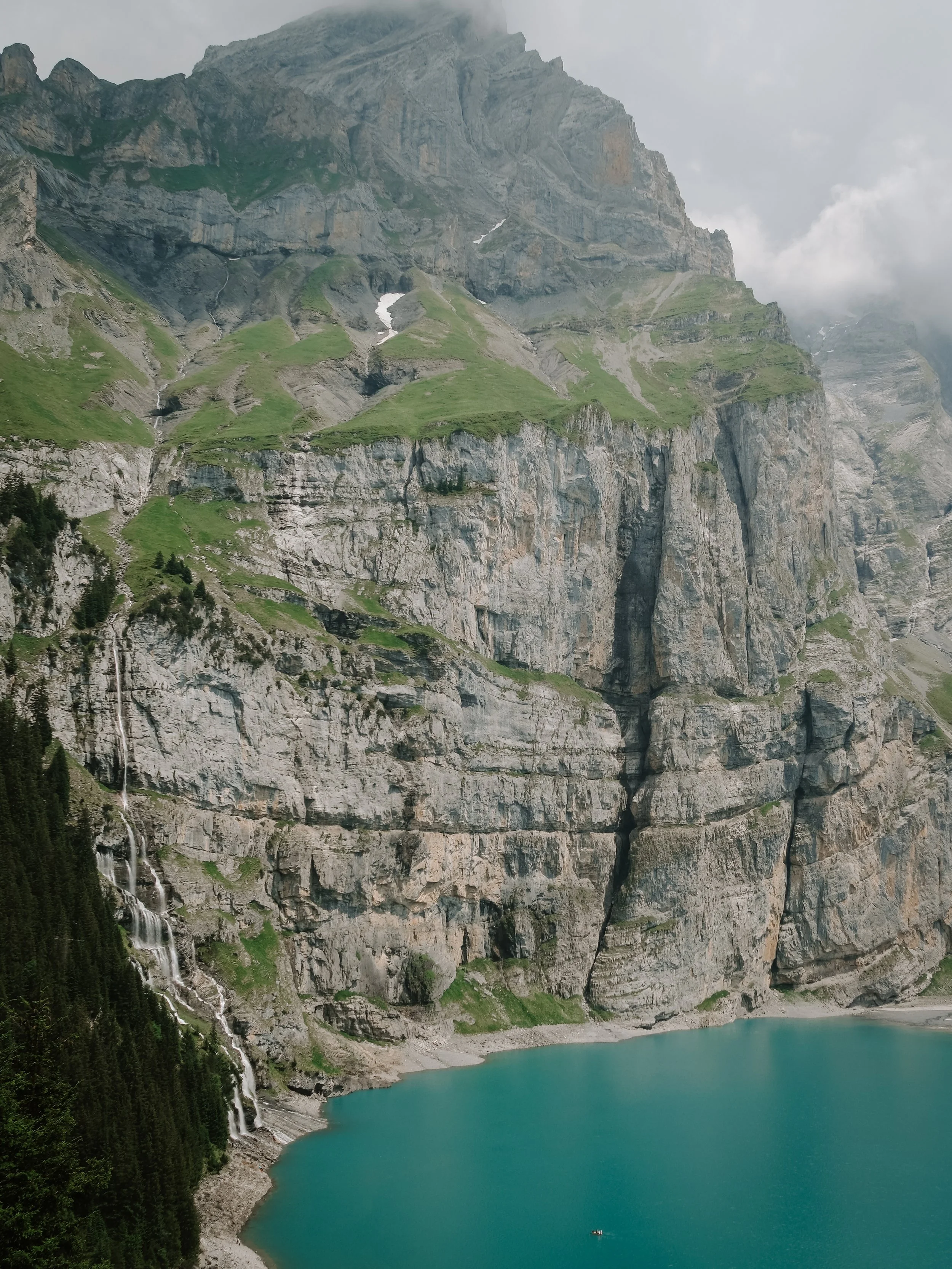
4. Oeschinensee
Photos don’t do it justice.
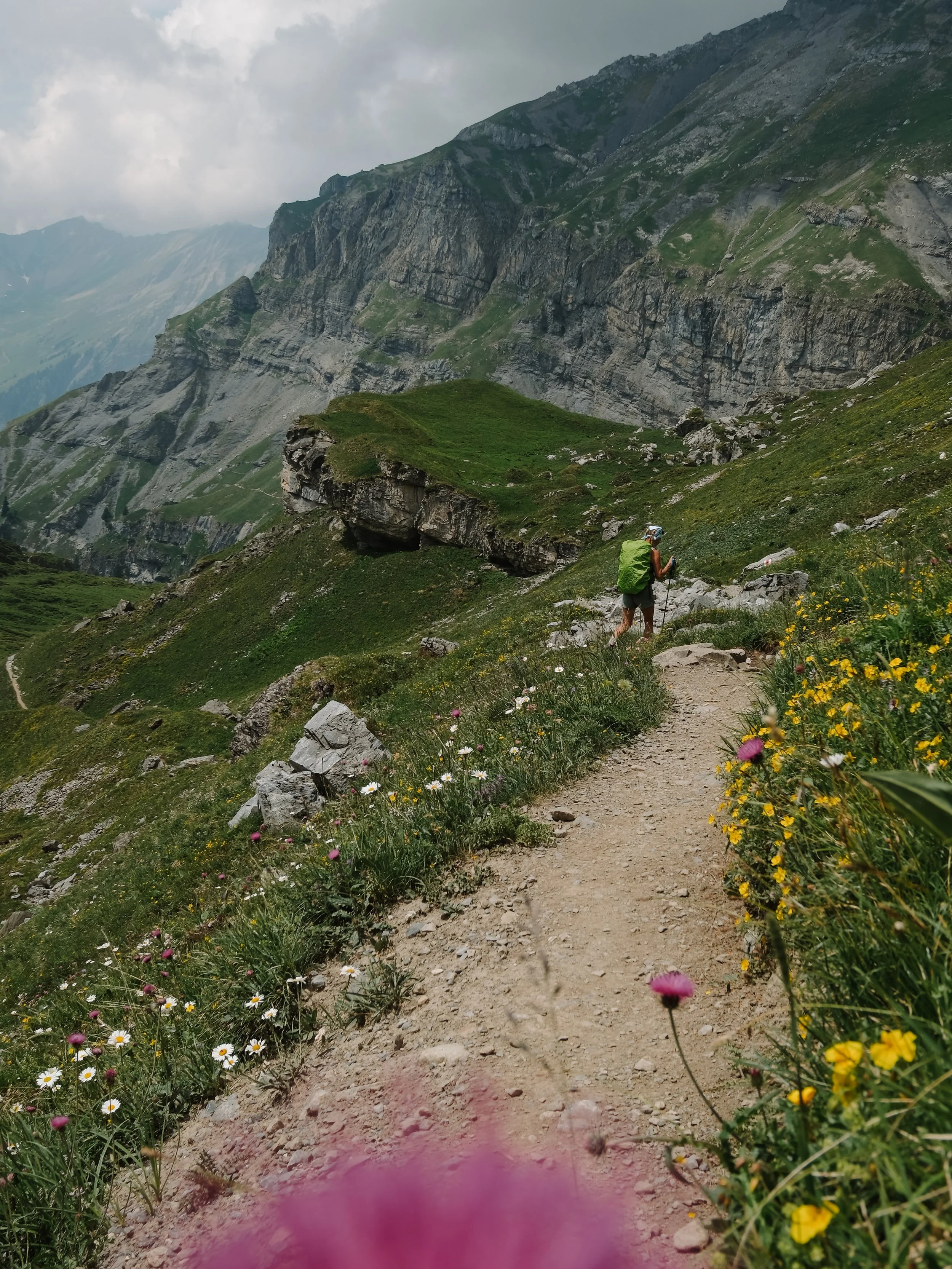
Approaching the lake from Hohtürli Pass made the experience even more rewarding. It was the busiest place we visited all week, but it’s easy to understand why once you see that water.
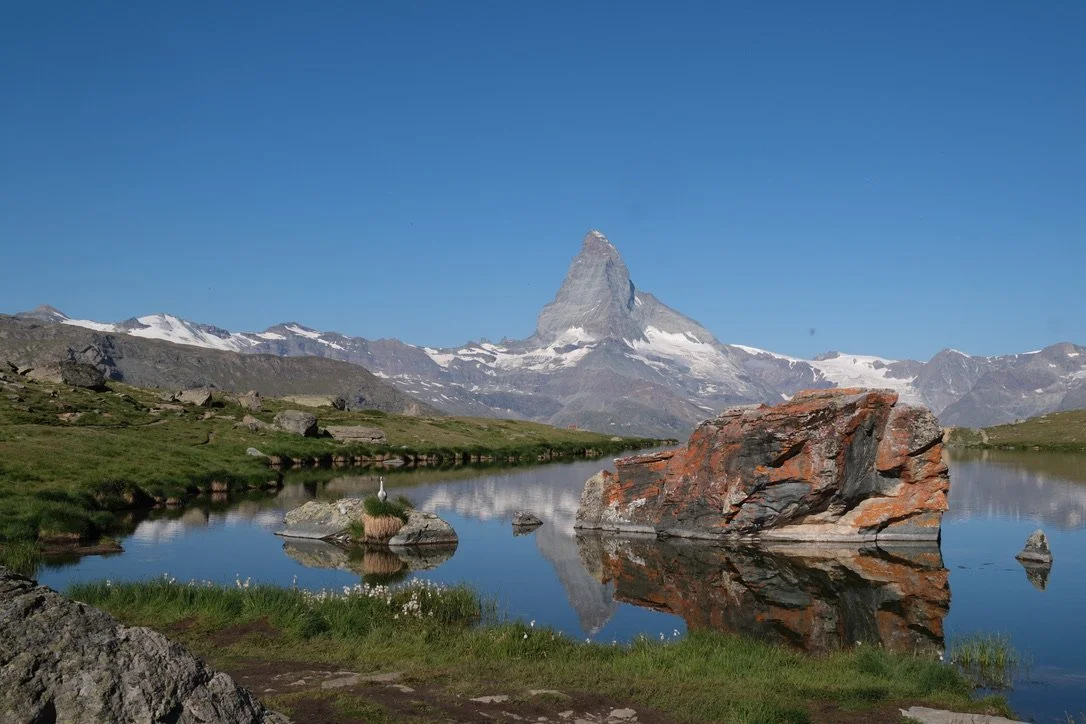
5. Blauherd & the Five Lakes Trail
If you’re spending time in Zermatt, don’t skip this one.
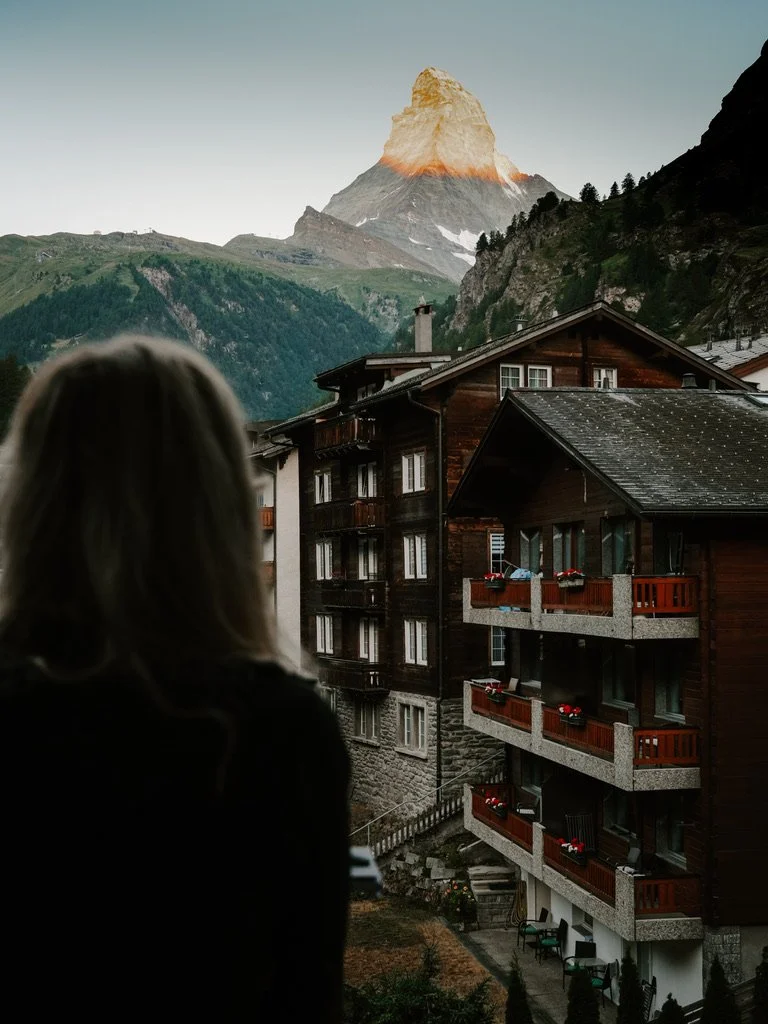
Matterhorn reflections, alpine lakes and relatively easy hiking make it one of the best day hikes in the area.
Where We Ate
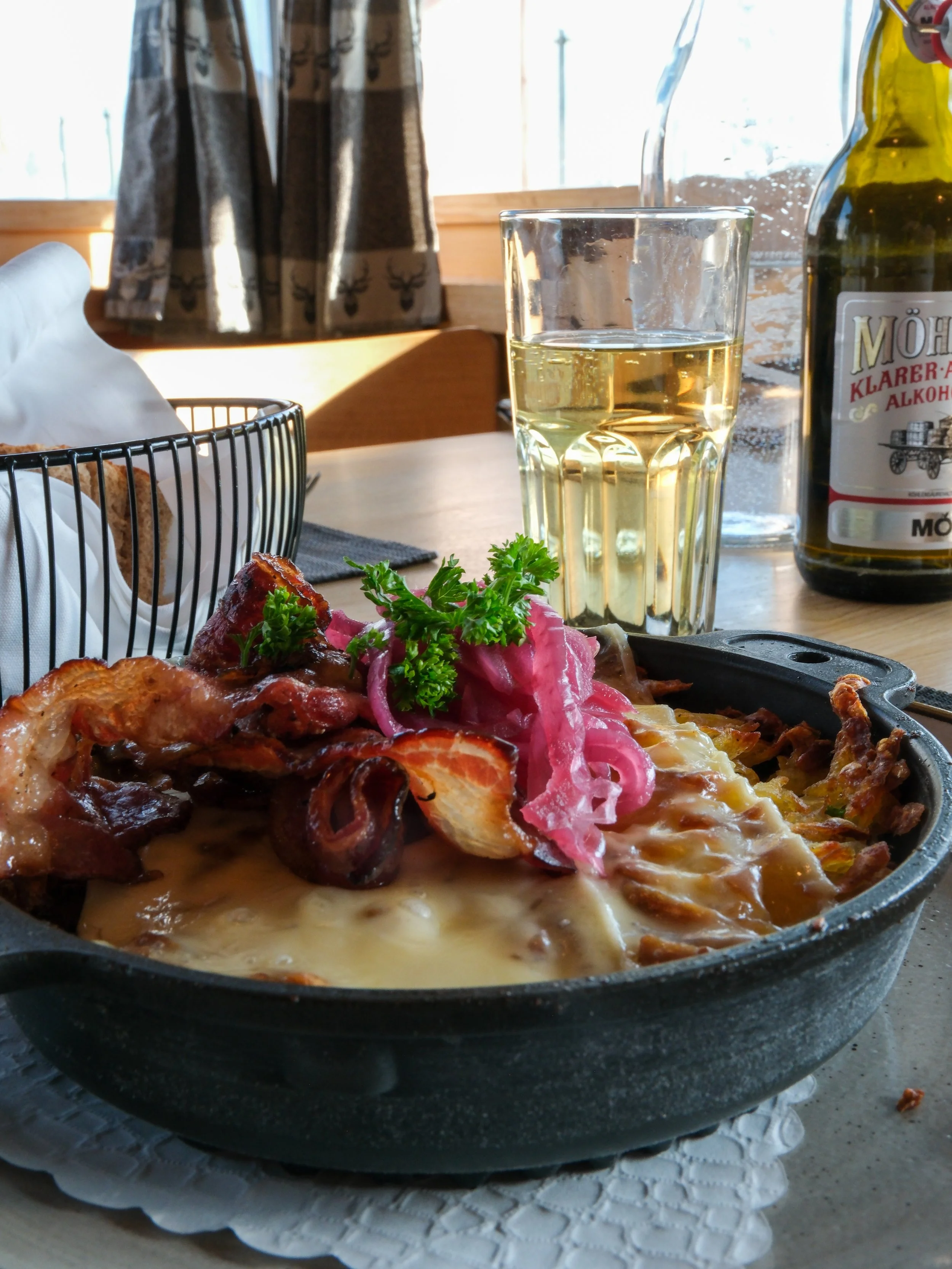
One thing I loved about this trip was that many of our accommodations included breakfast or optional half-board dinners, so we often ate where we were staying.
A few standouts were:
Café de Paris — Interlaken
Excellent Greek salad after arriving in town.
Mürren Palace
The fondue here was incredible. They also had some fantastic non-alcoholic prosecco options, which I really appreciated after long hiking days.
InSport Coffee Bar
Great smoothies and coffee before heading onto the trails.
Harder Kulm
This isn’t really about the food. It’s about the slushies. After hiking all the way up, that frozen drink tasted absolutely perfect.
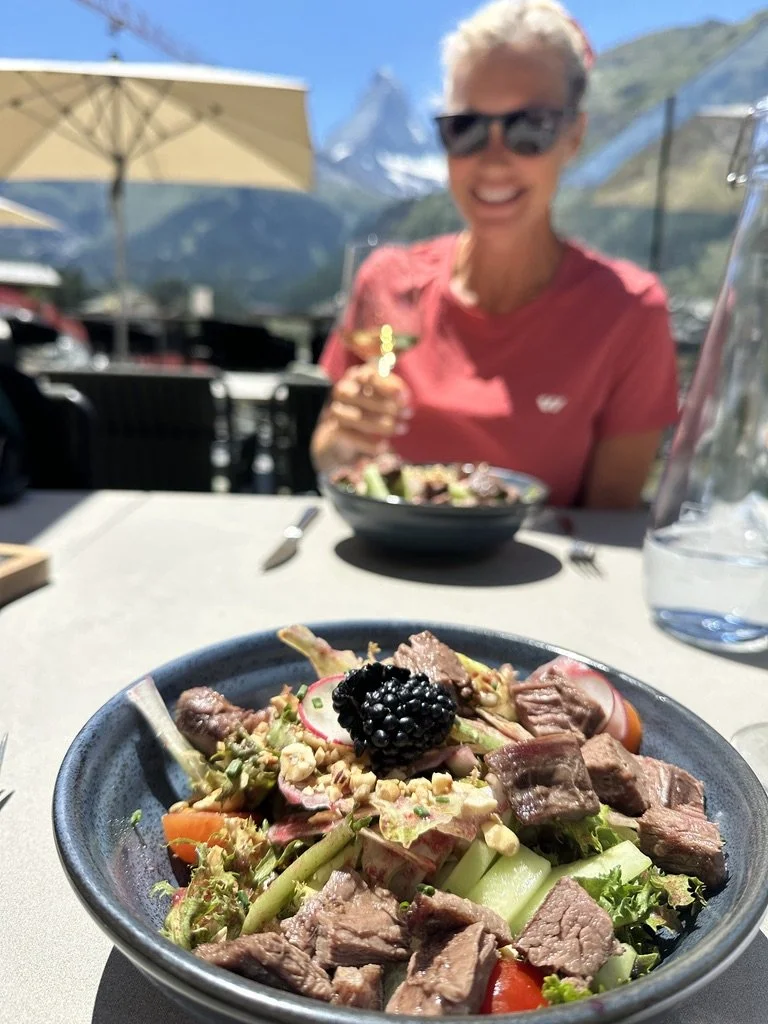
Hotel Schönegg Terrace — Zermatt
The blackberry summer salad topped with steak was incredible, and the Matterhorn views from the terrace made it even better. Don’t skip the mocktails.
Say Cheese at Grand Hotel Zermatterhof
Ending the trip with traditional cheese fondue and Toblerone dessert fondue felt like the perfect Swiss finale.
We’ve also had drinks on the terrace here on another trip, and it’s one of my favourite patios in Zermatt.
Honest Opinions: What’s Worth the Money (and What Isn’t)
One of the questions I get asked most is whether Switzerland is “worth it.”
For me, absolutely. But there are definitely experiences I’d prioritize over others.
Worth Every Dollar
✅ Staying overnight at Grindelwald First
✅ Mürren Palace Hotel
✅ Swiss Half Fare Card
✅ Jungfraujoch (at least once)
✅ SBB luggage transfer
✅ Mountain huts
✅ Schynige Platte
✅ Beausite Spa in Zermatt (especially after finishing a big hike)
I’d Skip Next Time
❌ The Glacier Express
I know this one might be controversial, but after spending two weeks surrounded by incredible mountain scenery, I just didn’t think it justified the price.
We rode First Class from Zermatt to Andermatt, and while it was comfortable, I’d much rather put that money toward another night in a mountain hut or another hiking experience.
❌ Lauterbrunnen in the middle of the day
The valley is beautiful, but it gets incredibly busy. If you can, visit early in the morning or later in the evening when the crowds have thinned out.
❌ Driving
I know renting a car feels like the obvious choice, but I genuinely don’t think it would have improved this itinerary. Switzerland’s public transportation system is so efficient that I never once wished we had a vehicle.
💡 Cassie’s Final Tip: If I had one piece of advice for anyone planning a hiking trip to Switzerland, it would be this: spend your money on experiences, not convenience. Stay in the mountain huts. Ride the scenic railways. Hike the extra kilometre to the viewpoint. Those are the moments you’ll remember long after the trip is over.
What Should You Pack?
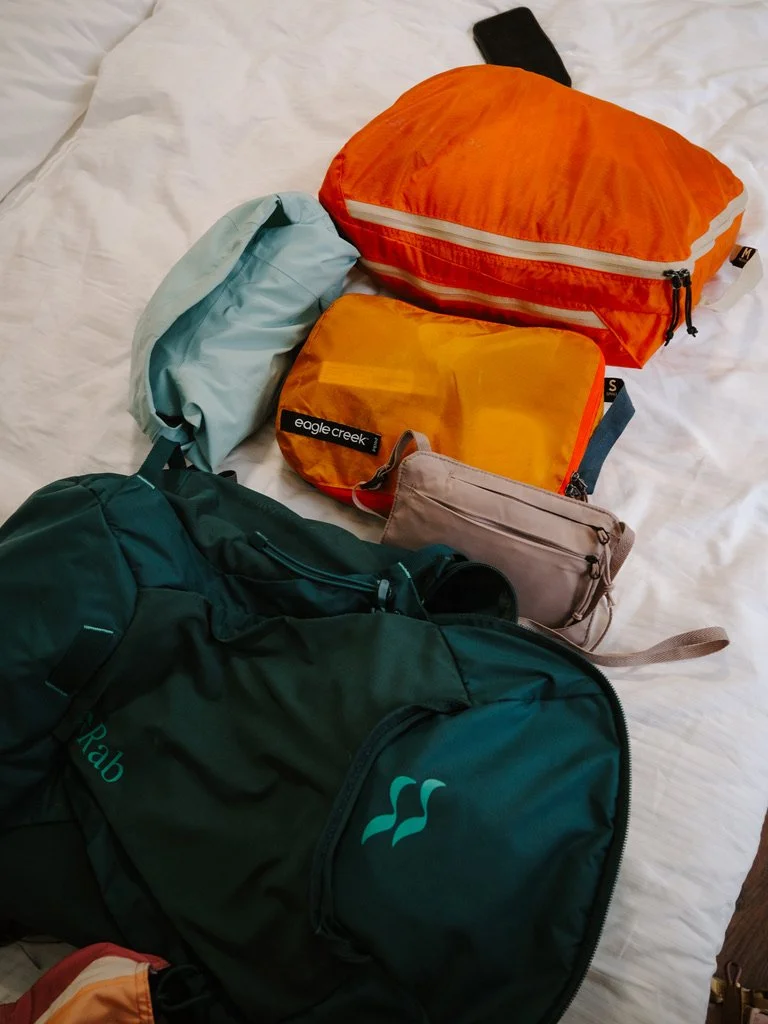
Packing for a hut-to-hut hike in Switzerland is very different from packing for a traditional backpacking trip. Since we stayed in a mix of mountain huts and hotels, used SBB’s luggage transfer service, and planned a laundry stop midway through the trip, we were able to keep our packs much lighter than expected.
👉 Read my complete guide: What to Pack for the Bernese Oberland Traverse, where I share my full packing list, favourite gear, what I was most grateful to have, and what I’d leave at home next time.
If you’re looking for one hiking destination that combines spectacular scenery, incredible infrastructure, charming villages and unforgettable mountain adventures, it’s hard to beat the Bernese Oberland.
Even after a week, I left with a list of trails I still want to hike and huts I still want to stay in.
And honestly, I can’t wait to go back.
Interested in the Ultimate Swiss Adventure?
Check out our complete Switzerland Guide and get ready for the trip of a lifetime!